
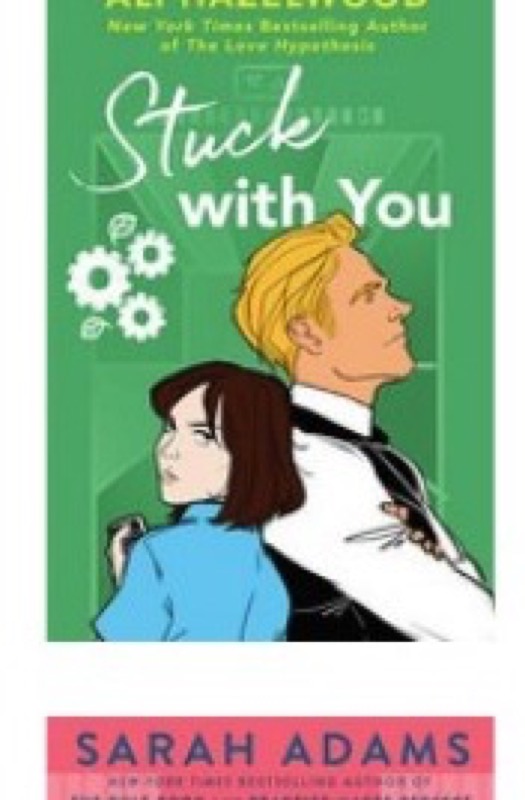
Stuck with You
Hook & thesis
In Stuck with You, Ali Hazelwood crafts a simmering enemies-to-lovers narrative that deftly navigates the complexities of ambition, rivalry, and the unforeseen intimacy that arises from conflict. Verdict: This book vibrates with tension, illuminating how the fiercest battles can lead to the most profound connections.
The contextual pivot
Positioned within the burgeoning subgenre of STEM romance, Stuck with You bridges the often niche appeal of academic rivalry to a broader audience, drawing in readers who may not typically venture into this territory. Hazelwood, known for her blend of smart humor and emotional depth, successfully aligns herself with authors like Christina Lauren and Helen Hoang, who similarly explore the intersections of intellect and romance. This book caters to an audience seeking both wit and heart, making it a compelling entry point into the realm of romantic fiction.
Deep-dive critique
Hazelwood’s structure is particularly effective; the dual perspectives allow us to witness the internal struggles of both protagonists, heightening the tension between them. The pacing, marked by a careful balance of sharp dialogue and introspective moments, mirrors the progression of their relationship. As the characters navigate their professional rivalry, the author skillfully integrates humor and vulnerability, creating a rich tapestry of emotional stakes.
The prose is sharp yet accessible, with Hazelwood’s background in academia infusing authenticity into the characters’ dialogues and interactions. The world-building, set against the backdrop of a competitive research environment, enhances the stakes, as both characters grapple with their ambitions and vulnerabilities. Yet, at times, the dialogue can tip into melodrama, risking the believability of the characters’ arcs. However, the emotional payoff in the ending—where misunderstandings give way to understanding—feels earned, leaving readers satisfied without succumbing to cliché.
Discussion launchpad
Stuck with You wields its enemies-to-lovers trope with precision, yet it raises polarizing questions about the nature of rivalry in romance. Does it romanticize toxic elements of competition, or does it showcase a healthy evolution from conflict to connection?
Questions for the room:
- How does the portrayal of rivalry influence your perception of the romantic relationship?
- Do you find the ending satisfying, or does it feel like a convenient resolution?
- In what ways does this book challenge or reinforce stereotypes about women in STEM?
- How do Hazelwood’s characterizations compare to those of other authors in this genre?
- What role does humor play in the development of the protagonists’ relationship?
#TheOrchidRoom #enemiestolovers #darkromance #STEM #darkheartlabs