
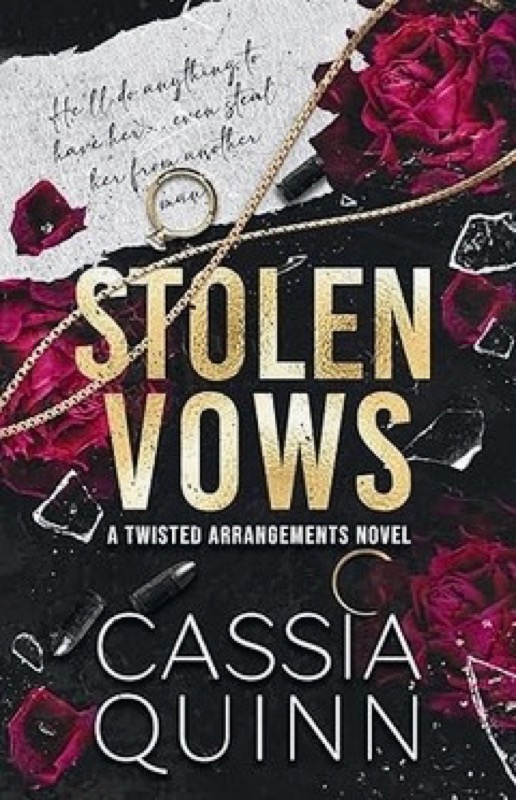
Stolen Vows
He'll do anything to have her... even steal her from another man.
Hook & thesis
In Cassia Quinn’s Stolen Vows, the intoxicating dance of obsession and ownership unfolds within the confines of an arranged marriage, where love is a mere pawn in a treacherous game of power. Verdict: This book masterfully intertwines dark romance with themes of possession, leaving readers questioning the very nature of love and freedom.
The contextual pivot
Stolen Vows firmly anchors itself in the arranged-marriage subgenre, yet it diverges into darker territory, exploring the implications of obsession and violence. Quinn’s work can be likened to authors such as Anna Zaires and Pepper Winters, who navigate similar themes of entrapment and desire within morally ambiguous relationships. This book seems tailored for readers who revel in the tension of dark romance, yet it also possesses an unsettling quality that may appeal to a broader audience willing to explore the depths of desire and manipulation—those who seek not just a story, but a psychological exploration of love’s darker facets.
Deep-dive critique
Quinn employs a dual perspective structure that shifts between the protagonists, allowing readers to navigate the tumultuous waters of both their desires and fears. This choice effectively amplifies the tension; we witness the protagonist’s internal struggles against a backdrop of external threats, creating a relentless pace that mirrors their urgent plight. The prose is lush yet sharp, encapsulating both the beauty and brutality of their world. For instance, Quinn’s vivid imagery brings to life the stark contrasts between the gilded allure of wealth and the shadowy underbelly of organized crime that looms over the characters.
However, while the pacing is brisk, it occasionally sacrifices depth—particularly in character development. The supporting characters, while intriguing, sometimes feel one-dimensional, serving primarily as catalysts for the protagonists’ arcs. This can detract from the emotional weight of certain pivotal moments, such as scenes depicting violent possessiveness that could have benefited from deeper exploration of the resulting psychological scars. The dialogue, though charged with tension, occasionally veers into melodrama, which might pull some readers out of the immersive experience.
The thematic exploration of possession versus love is compelling; yet, it raises questions about consent and agency that Quinn navigates with a delicate touch. The ending, while satisfying in its resolution, leaves a lingering ambiguity that invites interpretation—did the protagonists truly escape their past, or are they merely trapped in a different guise?
Discussion launchpad
Stolen Vows invites a plethora of polarizing discussions, particularly regarding the ethical implications of its romantic entanglements. The tension between love and possession stands at the forefront, demanding a nuanced discourse on what constitutes a healthy relationship.
Questions for the room:
- How do we reconcile the themes of obsession and love within the framework of arranged marriages?
- Does the portrayal of possessive behavior glamorize toxic relationships, or does it serve as a cautionary tale?
- In what ways does the dual perspective enhance or detract from the reader’s empathy for the characters?
- What might be the implications of depicting violence and infidelity themes as a backdrop for romance?
- How does Quinn’s writing style impact the reader’s perception of the characters’ moral complexities?
#TheOrchidRoom #arrangedmarriage #darkromance #stolenbride #literaryanalysis