
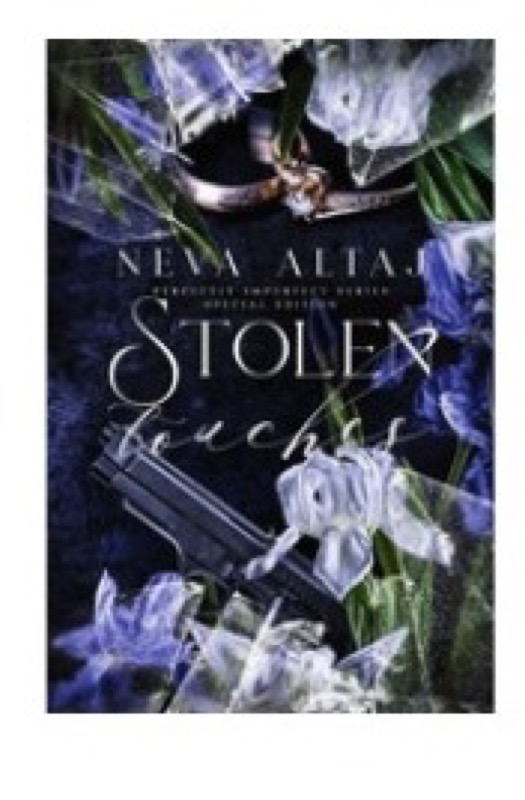
Stolen Touches
Perfectly Imperfect Series — Special Edition
Hook & thesis
In Neva Altaj’s Stolen Touches, desire simmers in the shadows of societal constraints, revealing the often painful intersections of love and guilt. Verdict: This book masterfully blends the thrill of forbidden romance with the haunting repercussions of choice, leaving readers breathless and contemplative.
The contextual pivot
Situated firmly within the forbidden love genre, Stolen Touches explores the depths of passion entangled with moral ambiguity. Altaj’s work resonates with fans of dark romance, akin to the writings of authors like Anna Zaires and A. L. Jackson, who similarly delve into themes of obsession and the complexities of desire. The book deftly bridges niche tropes to engage a broader audience, inviting general readers into a world where love defies societal expectations but is shadowed by its consequences. Altaj’s unique voice offers a fresh perspective, yet aligns with the emotional intensity that defines contemporary romances in this vein.
Deep-dive critique
The structure of Stolen Touches is a carefully woven tapestry of pacing and point of view that amplifies the central conflicts of the narrative. The alternating perspectives deepen the emotional resonance, allowing readers to inhabit the minds of both protagonists, while also enhancing the tension inherent in their illicit relationship. Altaj’s prose is rich and evocative, painting vivid imagery that immerses us in the characters’ tumultuous feelings. However, the pacing occasionally falters; moments of introspection may linger too long, momentarily diluting the urgency that underpins their love.
Character development is a standout element, as Altaj meticulously crafts flawed protagonists whose desires are palpable yet fraught with danger. The dialogue crackles with tension, often reflecting the characters’ inner conflicts as they navigate the precarious balance between love and moral peril. The thematic exploration of emotional intensity is evident, particularly through the lens of trauma and healing, though some readers may find the reliance on familiar tropes—such as the “bad boy” archetype—less innovative.
The ending, while satisfying, could polarize readers; it offers resolution yet leaves an echo of melancholic uncertainty that mirrors the story’s emotional core. This ambiguity invites further reflection on the characters’ choices and the societal structures that confine them.
Discussion launchpad
The dual nature of love—its potential for both liberation and destruction—invites rich debate among readers. What constitutes true freedom in love, and at what cost does one pursue it?
Questions for the room:
- Do you view the protagonists’ choices as courageous or reckless, and why?
- How do societal constraints shape the narrative’s tension, and can love ever truly thrive in such an environment?
- What role does the setting play in amplifying the emotional stakes of their romance?
- Are there elements of the narrative that felt overly familiar or clichéd, and how did they affect your reading experience?
- How does Altaj’s exploration of trauma shape the characters’ arcs, and does it add depth or distract from the central romance?
#TheOrchidRoom #forbiddenlove #darkromance #perfectlyimperfect #literaryanalysis