
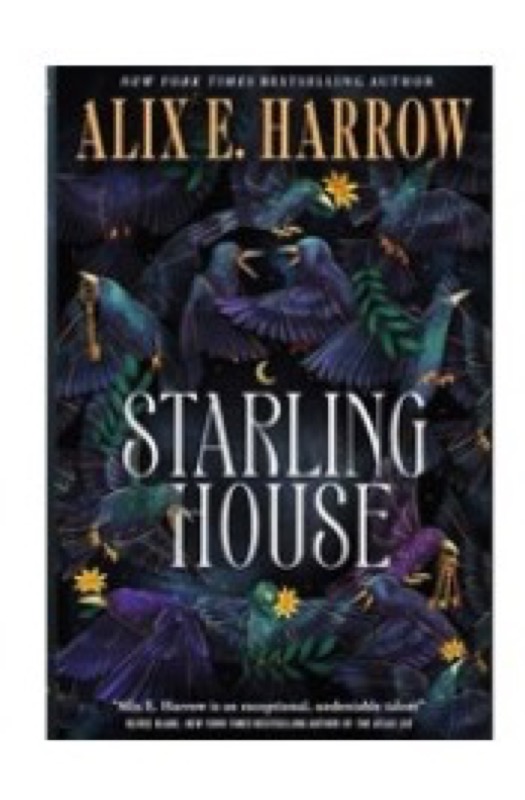
Starling House
Hook & thesis
In Starling House, Alix E. Harrow weaves a haunting tale that entwines grief and desire within the atmospheric embrace of a gothic romance, illustrating how the ghosts of our past compel us toward both destruction and salvation. Verdict: Harrow’s prose is a darkly enchanting exploration of the entwined nature of love and loss, making this book a must-read for those who dare to confront their shadows.
The contextual pivot
Rooted firmly within the gothic-horror-romance genre, Starling House evokes the spectral ambiance reminiscent of Shirley Jackson’s The Haunting of Hill House and the intricate character dynamics found in Daphne du Maurier’s Rebecca. Harrow’s narrative deftly balances eerie supernatural elements with rich emotional undercurrents, appealing to both ardent fans of gothic literature and newcomers intrigued by contemporary fantasy. The novel’s exploration of a haunted house as both a literal and metaphorical space serves as a bridge, drawing in readers who may shy away from traditional horror while still yearning for the thrill that comes from the unknown.
Deep-dive critique
Harrow’s craft shines through in her evocative prose and meticulously constructed world, where the titular Starling House is almost a character in its own right, filled with whispers of history and the weight of unresolved grief. The pacing is deliberate, allowing tension to build as we meander through the protagonist’s emotional landscape, creating a palpable sense of longing that mirrors the haunted setting. The shifting point of view deepens the reader’s connection to the characters, particularly as we delve into the complexities that define their relationships. Harrow’s dialogue crackles with authenticity, revealing motivations and vulnerabilities without veering into melodrama.
However, the novel’s commitment to dark themes and the exploration of grief may alienate some readers seeking a more traditional romantic arc. The ending, while thematically resonant, risks feeling ambiguous—are we left with hope or despair? This tension invites reflection, yet it may frustrate those who prefer closure, making it a double-edged sword in its narrative execution. Thus, while the book excels in world-building and character depth, its pacing and resolution might polarize readers.
Discussion launchpad
Harrow’s exploration of grief and desire invites a rich discussion about the boundaries of love and death, creating polarities that can ignite debate.
- Questions for the room:
- What do you think about the portrayal of grief in the context of romance? Does it enhance or overshadow the love story?
- How do the supernatural elements influence the characters’ journeys toward acceptance?
- In what ways does Starling House serve as a metaphor for the characters’ internal struggles?
- What role does the setting play in shaping the emotional stakes of the narrative?
- How do you interpret the ambiguous ending—does it suggest hope or a cycle of despair?
#TheOrchidRoom #gothic #horrorromance #hauntedhouse #literaryanalysis