
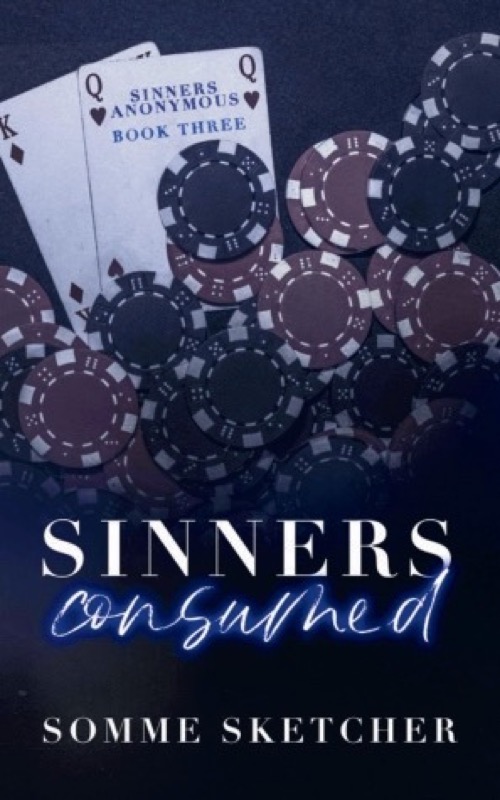
Sinners Consumed
Sinners Anonymous — Book Three
Hook & thesis
In Sinners Consumed, Somme Sketcher thrusts readers into a labyrinth of forbidden love, where obsession intertwines with organized crime, revealing the darkest recesses of human desire. Verdict: This novel is an audacious exploration of passion that boldly challenges the boundaries of morality and consequence.
The contextual pivot
As the third installment in the Sinners Anonymous series, this work delves deeper into the complexities of relationships shrouded by societal taboos. Sketcher operates within the realm of dark romance, a genre that thrives on the tension between desire and danger. In comparison to authors like Tarryn Fisher and Penelope Douglas, who similarly navigate the murky waters of romance entwined with moral dilemmas, Sketcher’s narrative pulls readers into a world that feels both familiar and unsettling. The invisible audience gravitates towards those who revel in tales where love is not just a feeling but a gamble—one that may lead to ruin or redemption.
Deep-dive critique
The structure of Sinners Consumed is marked by its nonlinear timeline, a choice that amplifies the psychological tension inherent in the characters’ relationships. By interspersing flashbacks with the present-day narrative, Sketcher crafts a sense of urgency that keeps readers on edge, reflecting the chaotic lives of the characters involved in organized crime. The point of view oscillates between protagonists, allowing a multifaceted exploration of their internal conflicts and desires; however, this approach occasionally sacrifices clarity for complexity, leaving some emotional beats underdeveloped.
Characterization shines in the depiction of the protagonists, who are steeped in obsession and moral ambiguity. The dialogue pulses with a gritty authenticity, underscoring the stakes involved in their illicit love. Yet, while the prose is often evocative, some passages risk melodrama, particularly in moments of emotional climax, which may alienate readers seeking subtlety over spectacle. The world-building, rife with the harrowing realities of crime, enhances the novel’s dark ethos; however, its reliance on familiar tropes can feel repetitive to seasoned readers of the genre. The ending, while gripping, leaves questions about the characters’ fates somewhat unresolved, inviting critique over whether it was intentionally ambiguous or an oversight.
Discussion launchpad
Sinners Consumed polarizes through its unabashed embrace of taboo and the moral dilemmas it presents. Can true love exist in the shadow of crime, or does it inevitably lead to self-destruction?
Questions for the room:
- Does the portrayal of obsessive love in the novel romanticize unhealthy relationships?
- How effectively does the nonlinear structure enhance or hinder emotional engagement?
- What role do societal taboos play in shaping our perception of love as depicted in the narrative?
- Is the ending an artistic choice or a narrative flaw?
- How do we reconcile the dark themes with our own moral compasses?
#TheOrchidRoom #forbiddenlove #darkromance #literaryanalysis #darkheartlabs