
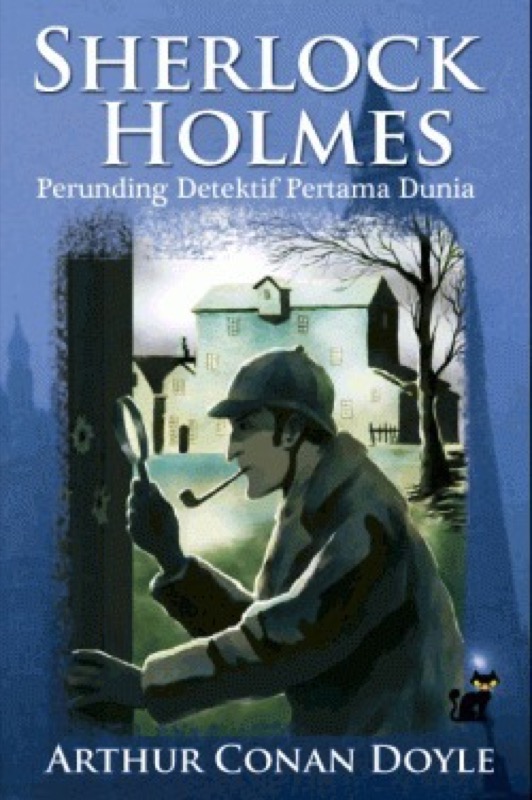
Sherlock Holmes: Perunding Detektif Pertama Dunia
Hook & thesis
Arthur Conan Doyle’s Sherlock Holmes: Perunding Detektif Pertama Dunia positions itself not merely as a detective tale, but as a deep exploration of the human psyche entangled in moral ambiguity. Verdict: This work serves as a dark mirror reflecting the complex interplay of deduction and despair, where every solved case threatens to unravel the very fabric of sanity.
The contextual pivot
In the broader landscape of dark thrillers, Doyle’s contribution is monumental, establishing the detective genre’s archetypes that many authors would later emulate. This book, while steeped in the classic structure of mystery, subtly infuses gothic elements, portraying Holmes not just as a sleuth but as a tortured genius navigating a world rife with ambiguity. The invisible audience here seems to be both enthusiasts of the classic detective narrative and contemporary readers drawn to darker themes. The juxtaposition of cerebral puzzles against a backdrop of lurking shadows challenges genre expectations, creating a bridge between niche tropes and a wider readership.
Deep-dive critique
Doyle employs a meticulous structure that oscillates between Holmes’s logical deductions and the emotional turbulence of the characters involved. The pacing is deliberate, allowing the reader to linger in the tension of uncertainty, a hallmark of gothic storytelling. The use of first-person narration through Watson’s perspective serves to deepen the psychological complexity, drawing readers into a labyrinth of human emotion and moral conflict.
However, while the prose is often sharp and evocative, it occasionally falters, slipping into overly verbose passages that dilute the narrative’s momentum. Character development shines particularly in the portrayal of Holmes, whose existential struggles resonate with a profound darkness, yet the supporting characters sometimes feel underexplored, leaving their motivations shrouded in shadow. The dialogue, laden with wit, often feels like a dance around deeper truths, hinting at layers of despair beneath the veneer of clever repartee.
The ending, while satisfying in its resolution of the central mystery, raises questions about the cost of such clarity — has the pursuit of truth ultimately led to more despair? This thematic tension aligns perfectly with the gothic ethos, suggesting that enlightenment may come with a heavy price.
Discussion launchpad
This book is ripe for discussion, particularly around its darker themes and the moral quandaries presented.
- Questions for the room:
- How does Doyle’s portrayal of Holmes reflect the duality of human nature?
- In what ways does the narrative structure enhance or hinder the story’s emotional depth?
- Are the gothic elements effectively integrated, or do they feel like an overlay on a traditional narrative?
- What does the resolution reveal about the nature of truth and its implications for the characters?
- How does this work compare to contemporary dark thrillers in terms of character complexity and thematic depth?
#LiteraryAnalysis #GothicEdge #darkthriller #detective #theorchidroom