
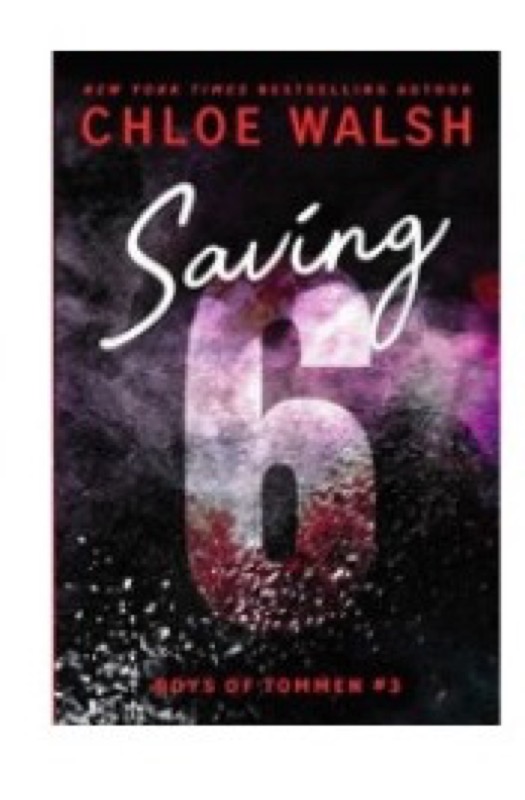
Saving 6
Boys of Tommen #3
Hook & thesis
In Saving 6, Chloe Walsh deftly navigates the treacherous waters of bully romance, crafting a narrative that exposes the staggering complexity of young love entangled with violence and power dynamics. Verdict: This book challenges the reader to confront the thin line between desire and destruction, emerging as a haunting exploration of loyalty and resilience that both captivates and unsettles.
The contextual pivot
As the third installment in the Boys of Tommen series, Saving 6 sits comfortably within the bully romance subgenre, a niche that often flirts with themes of dominance and vulnerability. Walsh’s body of work, characterized by dark undertones and raw emotional landscapes, appeals to an audience that revels in the tension between love and conflict. While the book operates within familiar tropes — the brooding anti-hero, the innocent yet resilient love interest — it transcends mere melodrama, making it accessible to broader readers seeking a deeper emotional resonance amidst the chaos of adolescent relationships.
Deep-dive critique
Walsh’s structure, marked by a dual point of view, amplifies the emotional stakes by allowing readers to experience the inner turmoil of both protagonists. This technique provides a nuanced understanding of their motivations, illustrating how love can emerge from violent circumstances. The pacing, however, occasionally falters; moments of high tension are sometimes followed by abrupt resolutions that lessen their impact. For instance, while the climactic confrontations are gripping, the aftermath feels rushed, undermining the weight of the characters’ choices.
The prose is evocative, with Walsh skillfully employing imagery that evokes the rawness of teenage emotions. Lines describing the physicality of encounters — the way bodies collide with both force and tenderness — are particularly striking, highlighting the intricate dance of power and submission. Yet, at times, the dialogue veers into cliché, particularly when wrestling with the protagonists’ feelings, which could benefit from more authenticity to ground their experiences.
The thematic landscape is rich, exploring ideas of loyalty, betrayal, and the complexities of forgiveness. However, the book’s reliance on bullying as a central conflict raises questions about the normalization of violence in romantic narratives. Ultimately, the ending, while passionate, may feel unearned for some readers, lacking the necessary buildup to justify the resolution of such intense emotional stakes.
Discussion launchpad
The interplay of love and violence in Saving 6 invites varied interpretations and can ignite heated discussions among readers.
- How does the portrayal of bullying influence our perception of romance?
- Does Walsh’s narrative provide a responsible exploration of its themes, or does it inadvertently glamorize harmful behavior?
- Can love truly flourish in environments rooted in power struggles, or is it fundamentally flawed?
Questions for the room:
- Do you see the dual perspective as enriching or complicating the narrative?
- How do you feel about the resolution — is it satisfying or rushed?
- In what ways do the characters’ actions reflect broader societal issues concerning youth and violence?
#TheOrchidRoom #bullyromance #darkromance #boys_of_tommen #literaryanalysis