
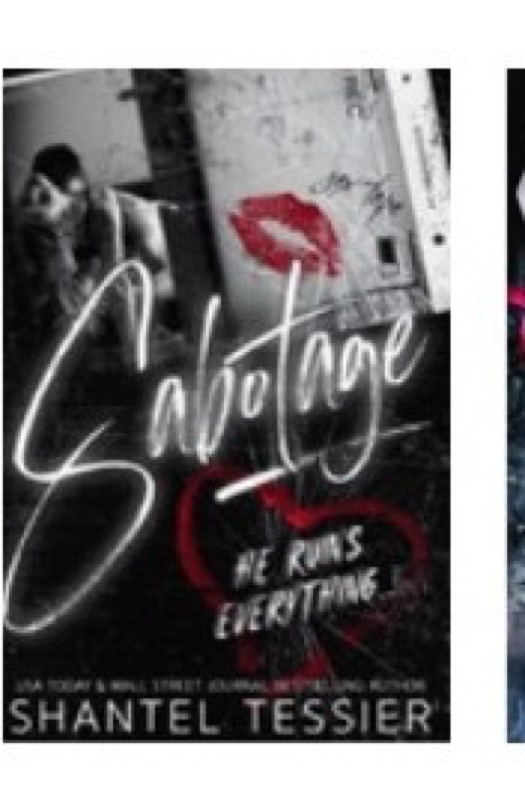
Sabotage
He ruins everything.
Hook & thesis
In Sabotage, Shantel Tessier deftly intertwines the tumultuous threads of revenge and desire, crafting a narrative that is as intoxicating as it is unsettling. Verdict: This book is a daring exploration of the fine line between love and hatred, where the true engine of conflict lies in the characters’ inability to escape their own destructive impulses.
The contextual pivot
As a contemporary entry in the enemies-to-lovers subgenre, Sabotage sits comfortably alongside works by authors like Tessa Bailey and Penelope Douglas, who similarly navigate the choppy waters of romantic rivalry. Tessier’s exploration of dark romance invites a distinct audience—those drawn to the intense emotional landscapes and morally ambiguous characters that often populate this niche. The book seamlessly bridges specific tropes with a broader readership, appealing to those who revel in complex relationships laced with obsession and revenge, while also inviting casual readers into its chaotic world.
Deep-dive critique
Tessier’s structure plays a crucial role in building tension, utilizing a dual perspective that juxtaposes the protagonists’ conflicting motivations. This choice not only heightens the stakes but also reveals the intricacies of their emotions, allowing readers to sympathize with characters deeply entrenched in their own sabotage. The pacing is deliberate, mirroring the slow burn of their animosity morphing into something more fervent—though at times, it risks losing momentum in the middle chapters, where the dialogue occasionally veers into repetitive territory.
The prose oscillates between lyrical descriptions and raw, unfiltered exchanges, effectively capturing the volatility of the characters’ relationship. Tessier excels in creating a visceral sense of place, particularly in scenes set within the locker room, where the tension of proximity amplifies the characters’ desires and insecurities. However, the reliance on certain clichés, particularly around the ‘bad boy’ archetype, could potentially disengage readers seeking fresh interpretations of the enemies-to-lovers trope.
Thematically, Sabotage poses intriguing questions about emotional intensity and the nature of obsession. The ending, while undeniably provocative, can feel unearned due to the swift resolution of deep-seated conflicts that had simmered throughout the narrative. This could polarize readers—some may find it a fitting conclusion to a tumultuous journey, while others might see it as a betrayal of the emotional groundwork laid earlier.
Discussion launchpad
The complexities of love and revenge create rich ground for debate. The interplay between passion and destruction invites readers to consider the lengths one might go for love, and whether such extremes can ever truly be justified.
Questions for the room:
- How do you interpret the balance between love and obsession in the characters’ motivations?
- Do you feel the ending satisfactorily resolves the main conflicts, or does it undermine the narrative tension?
- In what ways does Tessier’s portrayal of the locker room setting enhance or detract from the overall themes?
- How do you view the representation of the ‘bad boy’ trope—does it empower or hinder character development?
- What does this book reveal about the nature of emotional sabotage in relationships?
#TheOrchidRoom #enemiestolovers #darkromance #sabotage #literaryanalysis