
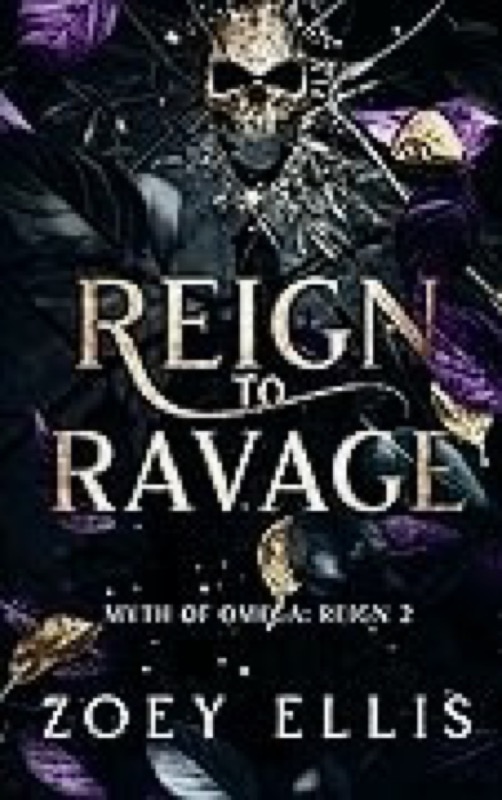
Reign to Ravage
Myth of Omega: Reign 2
Hook & thesis
“Reign to Ravage” by Zoey Ellis explores the tumultuous dynamics of power and desire within a darkly woven narrative of captivity. Verdict: This book masterfully entangles the reader in its seductive but dangerous exploration of identity and autonomy, making it a provocative addition to the captor-and-captive sub-genre.
The contextual pivot
Nestled within the omegaverse framework, Ellis’s work taps into the rich vein of dark romance, engaging with themes of dominance and submission while simultaneously critiquing societal structures. Compared to authors like Anna Zaires and Jennifer Bene, who also navigate the treacherous waters of power imbalances, Ellis offers a fresh perspective that delves deeply into the psychological undercurrents of her characters’ relationships. The invisible audience here comprises readers drawn to complex emotional landscapes, yet the book’s visceral intensity allows it to breach the boundaries of niche appeal, inviting a broader readership into its intricate world.
Deep-dive critique
Crafted with a deft hand, Ellis’s prose oscillates between lyrical beauty and raw, gritty realism, enhancing the reader’s immersion in a narrative laden with tension. The pacing is meticulously constructed, with a tight focus on the protagonists’ inner turmoil, which serves to heighten the stakes of their evolving relationship. The dual perspectives effectively capture the conflicting emotions of both captor and captive, allowing readers to empathize with characters whose desires and fears are intricately intertwined.
Yet, the thematic success of the novel lies not only in its ability to evoke sympathy but also in its unflinching exploration of darker impulses. The dialogue crackles with an intensity that reflects the characters’ power struggles, while world-building paints a vivid backdrop of a society steeped in rigid hierarchies. However, some readers may find the portrayal of omegaverse dynamics problematic, as it raises questions about consent and agency that linger uncomfortably throughout the narrative.
The ending, while climactic and filled with emotional release, may feel abrupt for some, leaving threads unresolved that could spark further exploration of the changing identities of its characters. Overall, Ellis succeeds in crafting a work that is as compelling as it is unsettling, but it does not shy away from challenging its audience’s sensibilities.
Discussion launchpad
This novel is bound to polarize readers, as its exploration of dark themes and power imbalances raises significant ethical questions about consent and relationships. While some will revel in its complex portrayal of desire, others may grapple with its more troubling implications.
Questions for the room:
- How do we navigate the line between fantasy and ethical considerations in dark romance narratives?
- In what ways does Ellis’s portrayal of power dynamics challenge or reinforce societal norms?
- Can the elements of captivity and forced proximity in the story be redeemed through character development and agency?
- How does the omegaverse framework affect the reader’s interpretation of consent in this narrative?
#TheOrchidRoom #ReignToRavage #DarkRomance #Captive #Omegaverse