
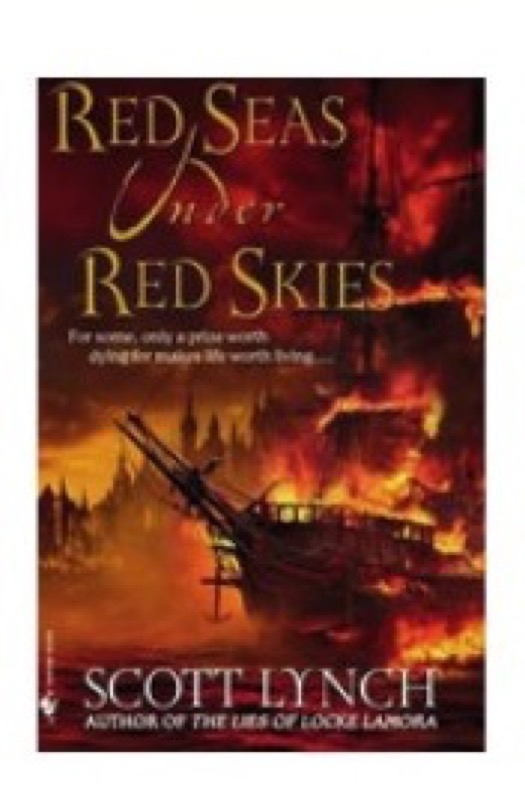
Red Seas Under Red Skies
Hook & thesis
“Red Seas Under Red Skies” by Scott Lynch navigates the treacherous waters of ambition and desire, intertwining a darkly romantic adventure with a deep exploration of loyalty and betrayal. Verdict: Lynch crafts a world that is as intoxicating as it is perilous, drawing readers into a love story drenched in moral ambiguity and the ceaseless pull of the sea.
The contextual pivot
This novel stands as a vibrant example within the fantasy-romance genre, marrying swashbuckling adventure with intimate emotional stakes. Lynch’s storytelling echoes the works of authors like Patrick Rothfuss and Naomi Novik, but while they often lean towards high fantasy, Lynch’s narrative is steeped in a grittier, more grounded reality, reflecting the harshness of life at sea. His protagonist, Locke Lamora, is not just a thief but a lover entangled in a web of choices that challenge the boundaries of loyalty and desire. The invisible audience here likely consists of fantasy enthusiasts who yearn for complex characters and relationships that defy conventional tropes, making Lynch’s work accessible to both niche readers and a broader audience.
Deep-dive critique
The structure of “Red Seas Under Red Skies” is a deliberate tapestry woven with alternating moments of high-stakes action and introspective character development. Lynch utilizes a third-person limited perspective that pivots between Locke and his companion, Jean, allowing readers to delve deeply into their motivations while maintaining an air of mystery. This choice enhances the tension and emotional resonance, particularly as their friendship is tested against external threats and internal desires.
Lynch’s prose is sharp and vivid, painting the sea as both a backdrop and a character in its own right. The dialogue crackles with wit and emotional depth, revealing not only the characters’ personalities but also the intricate loyalties that bind them. For instance, the exchanges between Locke and Jean are laced with an undercurrent of affection that feels authentic yet fraught with tension, showcasing how desire can complicate even the most steadfast friendships. However, while the pacing is generally well-executed, there are moments where the narrative drags—specifically during lengthy descriptions of the pirate lifestyle—which may detract from the overall momentum.
Thematically, Lynch excels in portraying the duality of love and ambition, as characters are continually faced with choices that test their allegiances. The ending, while satisfying, invites contemplation on what it truly means to be free in a world where every relationship is fraught with risk. The moral complexity of the characters makes it difficult to align fully with any one character’s choices, leaving readers in a morally ambiguous space that lingers long after the final page.
Discussion launchpad
This novel presents rich themes that prompt intense discussion about loyalty and the cost of desire, polarizing readers who may be drawn to or repelled by its morally ambiguous characters.
Questions for the room:
- How do the themes of loyalty and betrayal manifest in the relationships depicted in the book?
- In what ways does the setting influence the emotional stakes of the narrative?
- Do you find the moral ambiguity of the characters compelling or frustrating?
- How does Lynch’s portrayal of love challenge conventional romantic tropes in fantasy?
- What elements of the writing style do you think contribute most effectively to the book’s overall tension?
#TheOrchidRoom #fantasyromance #darkromance #literaryanalysis #redseasunderredskies