
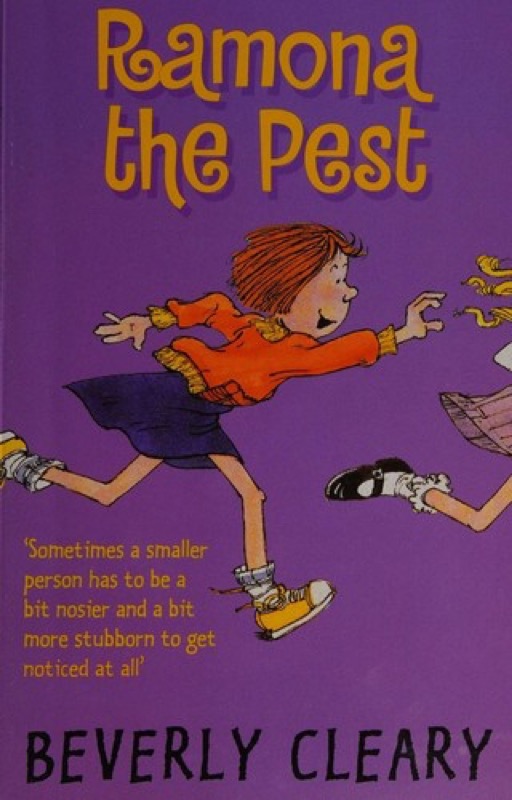
Ramona the Pest (Ramona, #2)
Ramona's mischievous adventures continue
Hook & thesis
In Ramona the Pest, Beverly Cleary skillfully captures the complexities of childhood through the lens of her beloved character Ramona Quimby. The book’s true engine lies in the exploration of identity and the challenges of growing up, manifesting in Ramona’s relentless quest for acceptance and autonomy. Verdict: Cleary’s narrative deftly balances humor and poignancy, making it an essential read for both children and adults.
The contextual pivot
Positioned within the realm of children’s literature, Ramona the Pest serves as a quintessential example of coming-of-age storytelling. Cleary’s work stands alongside other classic children’s authors like Judy Blume and E.B. White, who similarly navigate childhood’s trials. This book, while targeted towards young readers, bridges the gap to adult audiences through its humor and relatable themes of mischief and misunderstanding, revealing the enduring complexities of familial and social dynamics.
Deep-dive critique
The structure of Ramona the Pest is episodic, mirroring the disjointed experiences of childhood, where each chapter encapsulates a unique adventure or misadventure. Cleary’s use of a third-person limited perspective invites readers into Ramona’s internal world, allowing for an intimate understanding of her thoughts and feelings. The pacing is brisk, reflecting the energetic nature of childhood, yet moments of introspection are woven seamlessly into the narrative, enhancing thematic depth.
Characterization shines through Ramona’s vibrant personality and her interactions with peers and adults alike. Cleary’s dialogue is sharp and authentic, vividly portraying the misunderstandings that arise from innocent actions. For instance, Ramona’s attempts to assert herself often lead to humorous yet poignant consequences, effectively illustrating the tension between childhood spontaneity and societal expectations. However, some may argue that the episodic nature can leave certain subplots underdeveloped, potentially detracting from a cohesive arc. The ending, while satisfying, feels more like a pause than a resolution, reflecting the ongoing nature of childhood challenges.
Discussion launchpad
The balance between humor and the serious themes of childhood can provoke divergent opinions, particularly regarding its accessibility for both children and adults.
Questions for the room:
- How effectively does Cleary balance humor with serious themes?
- Do you think the episodic structure undermines the overall narrative arc?
- In what ways do Ramona’s experiences reflect broader societal expectations of children?
- How does this book compare to other coming-of-age stories in children’s literature?
- What elements of Ramona’s character resonate most with adult readers today?
#LiteraryAnalysis #children’sliterature #coming-of-age #literaryanalysis #theorchidroom