
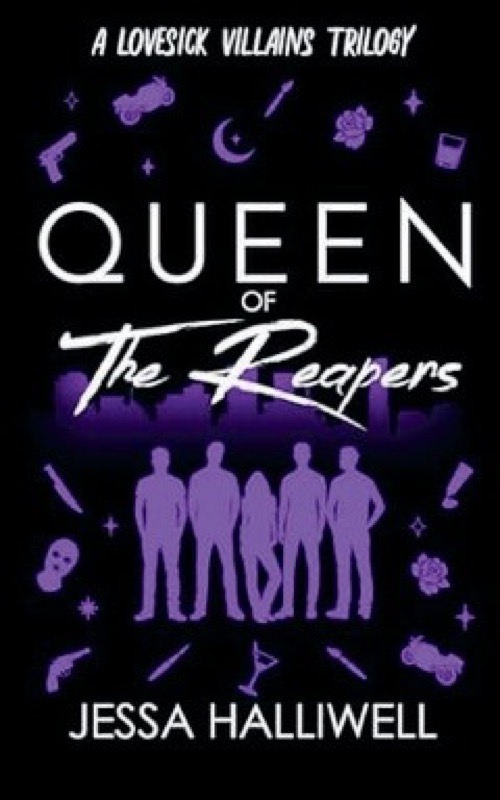
Queen of the Reapers
A Lovesick Villains Trilogy
Hook & thesis
In Queen of the Reapers, Jessa Halliwell masterfully intertwines desire, power, and moral ambiguity, crafting a narrative that elevates the reverse-harem trope into a dark exploration of obsession and agency. Verdict: This book is a tantalizing descent into the psyche of lovesick villains, challenging the reader to question the nature of love and loyalty amidst chaos.
The contextual pivot
Halliwell’s work nestles comfortably within the reverse-harem sub-genre yet diverges sharply with its suffocating atmosphere of dread and intensity. While many stories in this niche tend to flit lightly over emotional complexities, Halliwell boldly plunges deep into the murky waters of desire and power dynamics, echoing the thematic darkness found in works by authors like Tessa Bailey and Kresley Cole. Her approach speaks to both a niche audience with an appetite for morally gray characters and to general readers who might be drawn in by the allure of dark romance. This book deftly bridges the gap between genres, offering a multifaceted exploration of villainy that demands contemplation beyond the surface-level thrills.
Deep-dive critique
Halliwell’s narrative structure supports its thematic ambitions, employing a fragmented timeline that mirrors the protagonists’ fractured psyches. The alternating points of view allow readers to witness the internal conflicts of each character, enriching the reader’s understanding of their desires and motivations. This technique not only establishes tension but also invites a level of empathy that complicates the reader’s relationship with these morally ambiguous figures. The prose is sharp and evocative, capturing the visceral essence of obsession — a poignant reminder that desire can be both intoxicating and destructive.
However, the pacing falters at times; certain sections meander, diluting the urgency needed to maintain narrative momentum. The dialogue, while often gripping, occasionally slips into melodrama, overshadowing the intricacies of character development. Yet, Halliwell’s world-building excels, presenting a vivid landscape where danger lurks in every shadow, enhancing the gothic undertones of the story. The ending, while satisfyingly dramatic, does leave some emotional threads dangling, challenging the reader to confront the unresolved tensions that linger long after the final page.
Discussion launchpad
Halliwell’s ability to evoke desire and dread raises pivotal questions about the nature of love and loyalty in toxic environments. The polarizing elements of this narrative may divide opinions on the ethical implications of its characters’ actions and the portrayal of obsession in romantic contexts.
Questions for the room:
- How does Halliwell’s portrayal of obsession challenge or reinforce your views on toxic relationships?
- In what ways does the fragmented timeline enhance or hinder your connection to the characters?
- Do you believe the ending is justified within the narrative, or does it leave too much unresolved?
- How does the balance of power dynamics between characters affect the way we perceive their relationships?
- What role does the setting play in intensifying the themes of desire and danger in the story?
#TheOrchidRoom #QueenOfTheReapers #darkromance #lovesickvillains #reverseharem