
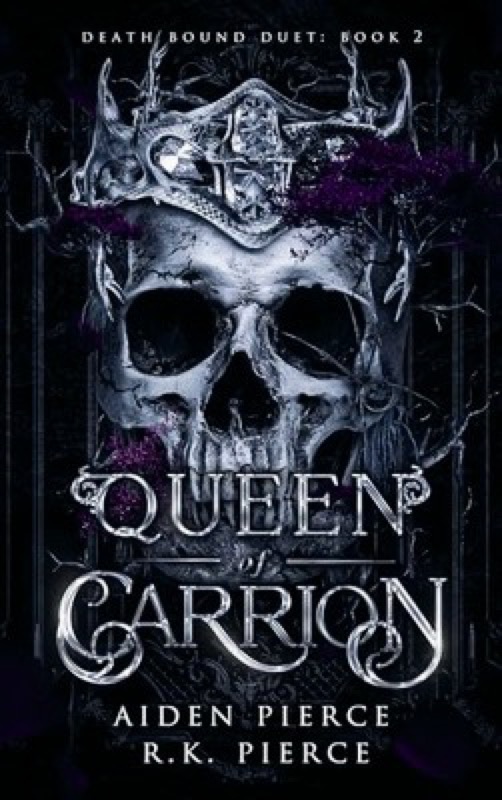
Queen of Carrion
Death Bound Duet: Book 2
Hook & thesis
In Queen of Carrion, Aiden Pierce and R.K. Pierce weave a tapestry of gothic horror and romantic obsession that challenges the reader to confront the visceral reality of love intertwined with decay. Verdict: This book is a haunting exploration of the ways in which desire can morph into a consuming darkness, leaving no room for redemption.
The contextual pivot
This novel, the second in the Death Bound Duet, occupies a liminal space within the gothic-horror-romance genre, blending elements of dark fantasy with a keen psychological insight into obsession. The dual authorship brings a nuanced depth to character development and thematic exploration, echoing the complexities found in works by authors such as Anne Rice and Sarah J. Maas. The invisible audience here seems to be readers who relish the collision of romance with macabre themes, yet the Pearces skillfully bridge niche tropes with broader emotional resonances that can appeal to a wider readership, potentially drawing in those unfamiliar with the darker corners of romance.
Deep-dive critique
The novel’s structure is a deliberate dance between past and present, with alternating perspectives that provide both immediacy and reflection. This choice enhances the tension, as readers are privy to the characters’ inner turmoil while simultaneously witnessing their tragic choices unfold. The pacing, however, sometimes falters; moments of high tension can be undercut by an over-reliance on exposition, which risks dulling the sharp edges of the narrative.
The prose often excels in its rich imagery, particularly when depicting decay and the grotesque beauty of the characters’ surroundings. Descriptions evoke a visceral response, immersing the reader in a world where love is as intoxicating as it is lethal. Yet, character development can feel uneven, particularly in secondary characters who occasionally serve more as plot devices than fully realized personas. The dialogue sparkles with wit and tension, particularly in moments that echo classic gothic exchanges, but some interactions can feel contrived, undermining the emotional stakes.
The thematic exploration of obsession and death is both a strength and a potential pitfall; while it propels the narrative, it can also risk alienating readers who may find the extremities of the characters’ desires unsettling. The ending, while impactful, raises questions about the characters’ journeys — is their descent into darkness truly earned, or does it feel like a narrative convenience?
Discussion launchpad
The juxtaposition of love and decay in Queen of Carrion invites a rich discussion around the nature of obsession and its consequences. Can love that is intertwined with darkness ever be redemptive? How do the authors balance the beauty of romantic longing with the grotesque realities of their world?
Questions for the room:
- How do you interpret the authors’ portrayal of obsession? Is it romanticized or critiqued?
- What role does the setting play in developing the overarching themes of the novel?
- How effective is the dual perspective in enhancing the emotional weight of the story?
- Are there moments where the narrative’s tension falters due to exposition?
- How does the ending align with or challenge your expectations of gothic romance?
#TheOrchidRoom #gothic #horrorromance #darkfantasy #literaryanalysis