
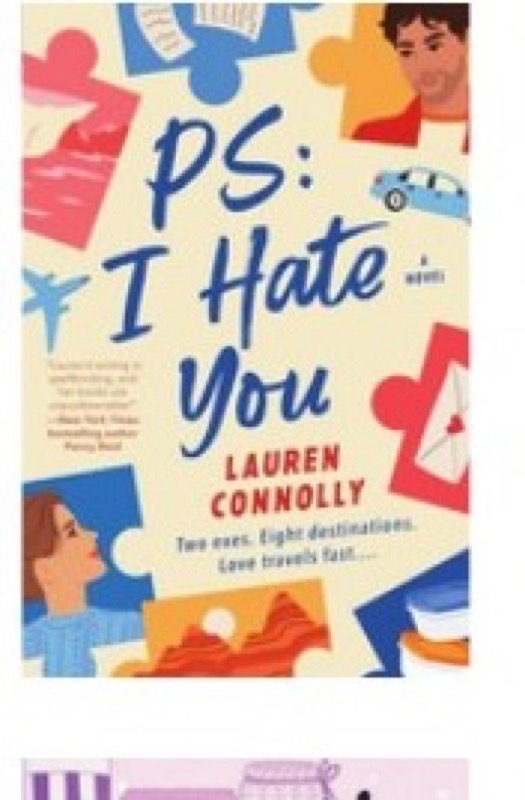
PS: I Hate You
Two exes. Eight destinations.
Hook & thesis
In Lauren Connolly’s PS: I Hate You, the tension between love and loathing is masterfully explored through the lens of an enemies-to-lovers narrative, revealing that the deepest connections can often sprout from the ashes of animosity. Verdict: This novel is a sharp examination of unresolved desire cloaked in the familiar trope of rivalry, transcending its genre to deliver a potent commentary on love’s complexity.
The contextual pivot
As a contribution to the enemies-to-lovers subgenre, Connolly’s work stands alongside classics like The Hating Game by Sally Thorne and Beautiful Disaster by Jamie McGuire, yet it pushes boundaries with its intricate exploration of travel as a metaphor for emotional journeys. The narrative deftly balances genre conventions while appealing to both niche readers and those seeking a deeper, more reflective romance. Its unflinching look at the interplay of anger and attraction speaks to a broad audience, challenging them to reconsider their own experiences with love and conflict.
Deep-dive critique
Connolly’s prose is sharp and incisive, a fitting partner to the protagonists’ biting exchanges. The pacing, structured around eight distinct destinations, mirrors the emotional landscape of the characters, allowing them to reveal layers of vulnerability amid their combative banter. By alternating perspectives, Connolly deepens the reader’s connection to both characters, effectively utilizing voice to differentiate their inner conflicts. However, this dual POV can occasionally lead to uneven pacing; moments of introspection feel rushed as they vie for attention alongside the vibrant settings.
The thematic success lies in the exploration of unresolved feelings; the characters’ journey is not just a physical one but also an emotional reckoning. The dialogue crackles with tension, yet at times, it can veer into cliché, undermining the authenticity of their conflict. The ending, while satisfying in its resolution, raises questions about whether the characters have truly transformed or merely capitulated to romantic inevitability. Connolly’s ability to weave humor amid darker themes keeps the reader engaged, yet some may find the balance precarious.
Discussion launchpad
The novel’s exploration of love intertwined with animosity invites a rich discussion about the nature of relationships and the boundaries of romance.
- How does Connolly challenge or reinforce traditional enemies-to-lovers tropes?
- Are the characters’ transformations believable, or do they feel forced by the narrative structure?
- What role does travel play in revealing deeper character truths, and does it distract from the central conflict?
- In what ways does humor serve as a coping mechanism for the characters?
Questions for the room:
- Do you believe that love can authentically emerge from hatred, or is it merely a romantic ideal?
- How does the setting enhance or detract from the emotional stakes of the story?
- What are the implications of using humor in serious romantic conflicts?
- Which character’s journey resonated most with you, and why?
#TheOrchidRoom #enemiestolovers #darkromance #literaryanalysis #darkheartlabs