
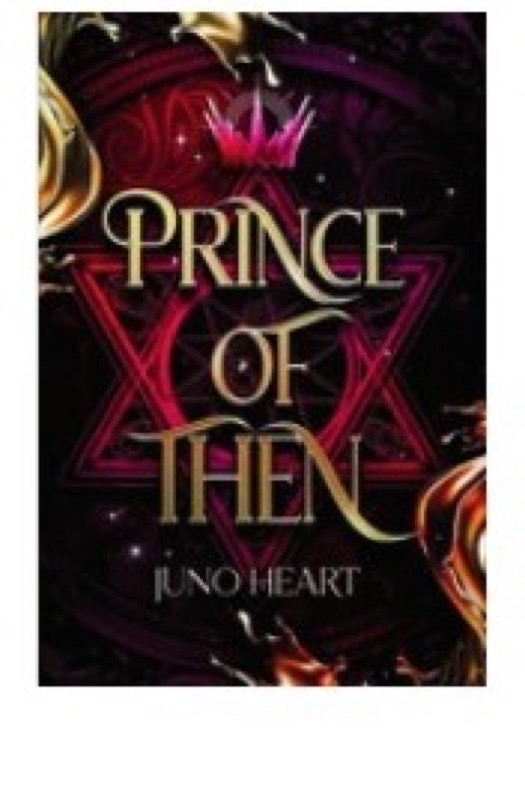
Prince of Then
Hook & thesis
In Juno Heart’s Prince of Then, the interplay of time and desire creates a hauntingly intricate tapestry of obsession and royal intrigue. Verdict: Heart deftly melds elements of fantasy and romance, crafting a narrative that seduces while unsettling, but ultimately delivers a stark warning about the perils of longing for what time cannot preserve.
The contextual pivot
Positioned firmly within the fantasy-romance genre, Prince of Then navigates the delicate balance between enchanting fae lore and the darker undercurrents of obsession. Heart’s work resonates with the thematic complexity found in authors such as Sarah J. Maas and Cassandra Clare, who similarly explore the fusion of magic and romance with a gothic twist. Yet, Heart’s narrative is distinctive in its psychological depth, appealing to readers who yearn for both escapism and introspection. The invisible audience here may be those who revel in the darker shades of fantasy, drawn to the allure of royal machinations and the tangled threads of time magic, which may also attract a broader readership seeking unique takes on familiar tropes.
Deep-dive critique
The structure of Prince of Then captivates through its nonlinear timeline, weaving past and present with a deft hand that enhances the thematic stakes of desire versus consequence. Heart’s choice to employ a dual point of view adds layers of complexity, allowing readers to grapple with the motivations and obsessions of both leads. The prose is rich and evocative, capturing the ethereal beauty of the fae realm while simultaneously grounding the narrative in the visceral realities of obsession and power. For instance, the visceral descriptions of time magic manifest not just as a tool of manipulation but a metaphor for the characters’ struggles with their longing for control and permanence in an ever-shifting world.
However, while the craft excels in building a haunting atmosphere, the pacing falters at times, with certain plot points feeling rushed or underdeveloped. The intricacies of royal intrigue could have been probed deeper, offering a richer exploration of the political landscape. Moreover, the ending, while impactful, risks feeling unearned for some, as the culmination of obsession could be interpreted as a tragic inevitability rather than a hard-won resolution. Nonetheless, the thematic explorations of obsession and desire resonate long after the last page is turned, making it a compelling read despite its flaws.
Discussion launchpad
In the intricate weave of Prince of Then, polarities of desire, control, and the consequences of obsession serve as fertile ground for discussion.
Questions for the room:
- How does Heart’s portrayal of obsession challenge or reinforce traditional romantic tropes?
- In what ways does the non-linear timeline enhance or detract from the character development?
- Can the ending be considered a reflection of empowerment or a cautionary tale?
- How do the themes of time magic and royal intrigue speak to contemporary societal issues?
- What elements of the narrative push the boundaries of typical fantasy-romance, and do they succeed?
#TheOrchidRoom #fantasyromance #darkromance #time #fae