
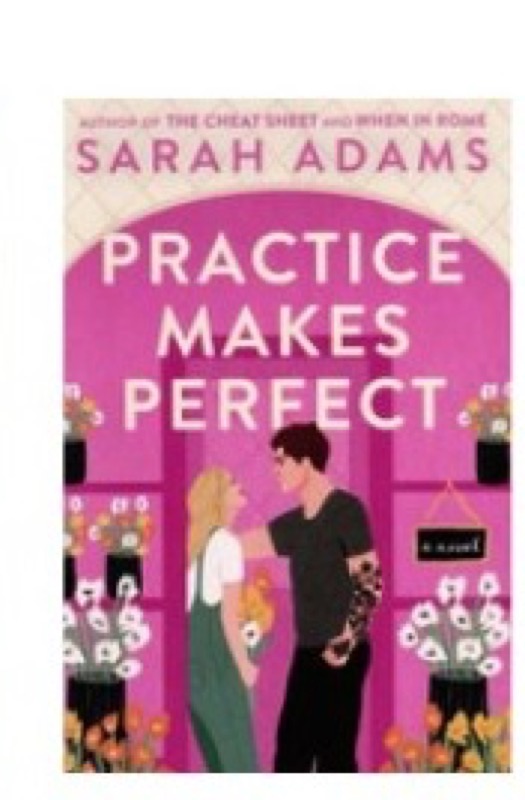
Practice Makes Perfect
A novel
Hook & thesis
In Sarah Adams’ Practice Makes Perfect, the intricate dance of enmity and desire unfolds in a small-town setting, where the collision of ambition and vulnerability fuels an intoxicating duality. Verdict: This book deftly explores how love can sprout from the ashes of rivalry, while also revealing the precarious balance between aspiration and emotional connection.
The contextual pivot
As an addition to the enemies-to-lovers subgenre within contemporary romance, Practice Makes Perfect stands out by weaving a narrative that defies typical romantic clichés. Adams crafts a world that resonates with familiar themes but elevates them through nuanced character development and sharp dialogue. Unlike many of her contemporaries, who often lean heavily into humor or overt sentimentality, Adams achieves a compelling blend of tension and authenticity, appealing to both niche readers and those who may be new to the genre. The invisible audience here consists of readers seeking both escapism and emotional truth, a delicate fusion that Adams handles with remarkable finesse.
Deep-dive critique
Adams employs a structure that plays with pacing and point of view, alternating between the perspectives of the two protagonists in a manner that keeps the reader engaged while deepening the understanding of their personal stakes. This duality not only serves to heighten the tension but also invites the reader into the raw vulnerability of both characters. The dialogue sparkles with wit and underlying tension, a testament to Adams’ skill in portraying complex emotions through seemingly mundane interactions.
However, the pacing occasionally falters, particularly in the latter half where the resolution feels slightly rushed. This rush undermines some of the emotional weight built earlier, leaving readers craving a more profound exploration of the characters’ growth. The thematic core—how rivalry can transform into intimacy—shines through, yet the execution in the climax doesn’t quite feel earned, as if the characters’ evolution is truncated. The world-building, while effectively capturing the essence of a small town, occasionally skims the surface, missing opportunities for deeper exploration of the environment’s impact on the characters’ motivations and desires.
Discussion launchpad
The interplay of rivalry and romance in Practice Makes Perfect invites lively debate on the nature of relationships and personal growth:
- Does the enemies-to-lovers trope inherently require a grounding in mutual respect, or can it thrive on mere attraction?
- How effectively does the pacing in the latter half affect the overall emotional resonance of the story?
- What role does setting play in shaping character motivations in romance narratives?
- Can the combination of humor and tension create a more authentic portrayal of love, or does it dilute the emotional stakes?
Questions for the room:
- How did the dual perspective enhance or detract from your connection to the characters?
- In what ways did you find the tension between ambition and intimacy relatable or exaggerated?
- What did you think about the resolution — was it satisfying in terms of character development?
#TheOrchidRoom #enemiestolovers #darkromance #romcom #literaryanalysis