
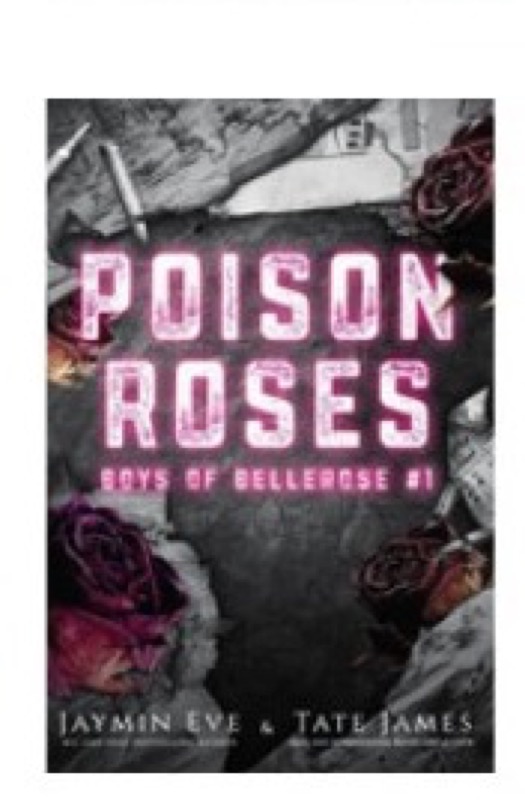
Poison Roses
Boys of Bellerose #1
Hook & thesis
In Poison Roses, authors Jaymin Eve and Tate James navigate the treacherous waters of youth infatuation entwined with a sinister backdrop of bullying and manipulation. Verdict: This book deftly explores how power dynamics in relationships can distort love into a dangerous game, revealing the darker shadows of desire amidst the thrill of rebellion.
The contextual pivot
Positioned firmly within the bully-romance subgenre, Poison Roses emerges as a daring foray into the lives of its characters, exploring the intricate balance between attraction and toxicity. This work taps into themes prevalent in similar titles such as Cruel Intentions and After, where the allure of danger becomes irresistible. Eve and James craft a narrative that speaks to a younger audience, yet possesses the potential to resonate with readers seeking complexity in their romantic tropes. The unspoken audience here is both those who revel in the dramatic escapades of high school hierarchies and those who linger at the edges, contemplating the true cost of such fiery entanglements.
Deep-dive critique
Poison Roses employs a dual perspective that oscillates between protagonists, enhancing the reader’s understanding of the conflicting emotions at play. This structure allows for a rich examination of the psychology behind bullying, as feelings of powerlessness and desire intermingle. The pacing ebbs and flows; moments of tension are punctuated with quiet interludes that lay bare the characters’ vulnerabilities. However, the dialogue at times veers into cliché, losing the sharp edge that the narrative aspires to maintain.
Themes of violence and control are omnipresent, effectively captured through the authors’ use of vivid imagery and visceral emotion. The world-building, though compact, evokes a palpable atmosphere, reminiscent of the claustrophobic intensity found in gothic literature. However, the reliance on certain tropes may alienate readers who seek more nuanced portrayals of relationships; the fine line between romantic tension and abusive dynamics is occasionally blurred. The ending, while dramatic, risks feeling unearned as it leans heavily on reader expectations rather than character development.
Discussion launchpad
The interplay of desire and danger in Poison Roses invites rich debate around the portrayal of bullying in romance. Will the blend of love and violence ignite discussions on the normalization of toxic relationships in media? What does this say about our societal acceptance of such dynamics?
Questions for the room:
- How do the authors balance the line between romantic attraction and harmful behavior?
- Does the dual perspective enhance empathy for both main characters, or does it complicate their moral standing?
- In what ways does the setting amplify the themes of power and control?
- Are the characters’ motivations compelling enough to justify their actions, or do they fall into typical archetypes?
- How might this book affect perceptions of relationships among its target audience?
#TheOrchidRoom #bullyromance #darkromance #BoysOfBellerose #literaryanalysis