
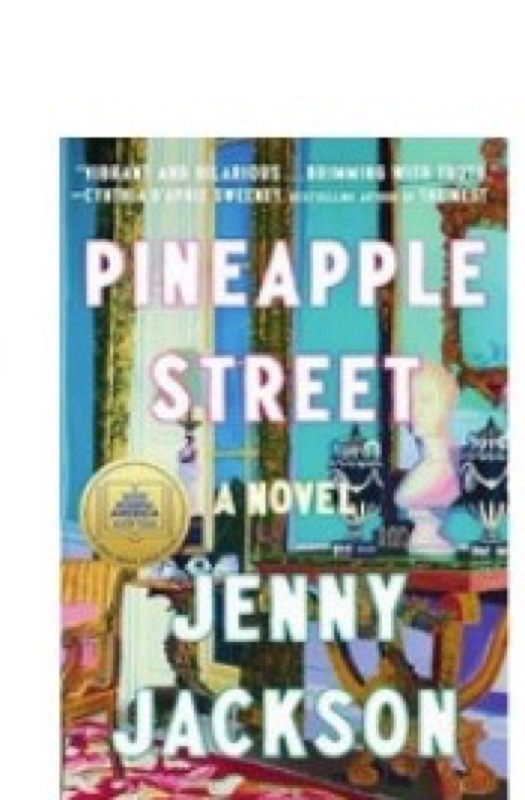
Pineapple Street
A Novel
Hook & thesis
Jenny Jackson’s Pineapple Street explores the intricate web of family, class, and the desperation that accompanies forbidden love. Verdict: This book serves as a biting commentary on the nuances of privilege and desire, revealing that what is deemed forbidden often lies at the heart of our deepest yearnings.
The contextual pivot
Nestled within the forbidden-love genre, Pineapple Street offers a contemporary lens on family dynamics and class disparity that resonates with modern readers. Jackson’s narrative draws comparisons to the works of authors like Nicole Krauss and Jonathan Franzen, who similarly dissect the tensions of familial bonds against the backdrop of societal expectations. The invisible audience comprises those who relish a blend of literary fiction and emotional turmoil, as Jackson’s portrayal of family dysfunction and classism bridges niche tropes to broader themes of human connection.
Deep-dive critique
At its core, Pineapple Street operates on the tension between societal norms and individual desires, primarily through its character-driven structure. Jackson employs a multi-perspective narrative that shifts between family members, allowing readers to delve into the conflicting motivations that fuel each character’s actions. This structure effectively amplifies the thematic resonance of classism and dysfunction; as perspectives collide, the reader witnesses the complexity of each character’s plight, particularly in their pursuit of love and acceptance.
The prose is both incisive and reflective, with moments of dark humor that punctuate the otherwise weighty subject matter. Jackson’s dialogue sparkles with authenticity, revealing the underlying resentments and desires that bubble beneath the surface of seemingly placid family interactions. However, the pacing occasionally falters, as some passages meander into introspection at the expense of plot momentum. This can create a dissonance between the reader’s emotional investment and the narrative’s direction, particularly in the latter half where resolution feels rushed.
The thematic exploration of classism is particularly well-executed, providing a biting critique of how privilege can blind individuals to their own shortcomings and the suffering of others. Yet, while the ending offers a semblance of resolution, it may leave some readers questioning whether the characters have genuinely evolved or merely adapted to their circumstances. This ambiguity can be both a strength and a flaw, depending on one’s perspective on character growth and redemption.
Discussion launchpad
The interplay of privilege and desire in Pineapple Street invites rich discussion about the moral quandaries faced by its characters. The book elicits strong opinions on whether the pursuit of forbidden love justifies the chaos it unleashes.
Questions for the room:
- How does Jackson’s portrayal of family dysfunction challenge or reinforce traditional narratives in forbidden-love stories?
- In what ways do you think the multi-perspective structure enhances or detracts from the emotional impact of the story?
- Do you believe the ending is a reflection of true growth for the characters, or is it merely a superficial resolution?
- How do the elements of classism in the book resonate with contemporary societal issues?
- Which character’s journey resonated most with you, and why?
#TheOrchidRoom #forbiddenlove #darkromance #familydysfunction #literaryanalysis