
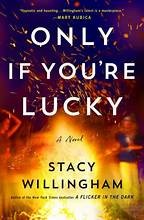
Only If You're Lucky
A grieving girl, a magnetic roommate, a dead fraternity boy — a campus novel about friendship as possession.
Hook & thesis
Margot arrives at Rutledge wearing her best friend’s death like a coat she can’t take off, and Lucy Sharpe — vivid, careless, a collector of people — takes her in. Everything Lucy gives looks like rescue from the inside: a house, a circle, a self. Willingham writes female friendship the way she writes marshes and sleepless houses — as an element you can drown in politely. Verdict: The friendship writing is the sharpest of her three novels; the mystery machinery creaks where the emotions never do.
The contextual pivot
The third novel moves the Gothic to campus. No marsh, no crib, no prison: a rented house at the edge of a college where four girls keep a sealed world beside a fraternity’s open one. It borrows dark academia’s weather without its Latin — what Willingham is actually studying is the economics of being chosen, and what the chosen owe.
Deep-dive critique
Lucy exists only inside Margot’s wanting, and the novel’s discipline is never letting us meet her unobserved — every scene of Lucy is lit by the person narrating it, which means the book’s real subject is the lighting. The house does threshold work: between campus and town, between the girls Margot was raised to be and the one Lucy keeps almost inventing. Eliza, the dead friend, is rationed out in flashback the way Willingham rations all her pasts — one fact at a time, each one repricing the present.
The honest cost is Levi. The dead fraternity boy powers the plot while the book’s grief flows, deliberately or not, toward the missing girl — and the investigative machinery around his death is the thinnest Willingham has built. The ending partly redeems it: Margot’s narration has been edited by longing all along, and the final movement makes her — and us — reread the friendship at its true exchange rate.
Discussion launchpad
Lucy Sharpe collects people the way houses in Willingham collect weather. This is a book about what it costs to be picked — and what the picker is buying.
Questions for the room:
- What does Lucy give Margot that Eliza’s memory can’t — and what does Margot give Lucy that Sloane and Nicole don’t?
- The grief flows toward the missing girl, not the dead boy. Is that imbalance Margot’s failing, the novel’s, or its argument?
- Is Lucy a person in this book, or only the shape of other people’s hunger — and does the ending settle it?
- Margot calls herself lucky. Who in this novel actually is, and who only looks it from outside?
- Chloe narrates through damage, Isabelle through deprivation, Margot through desire. Which of the three does Willingham trust least?