
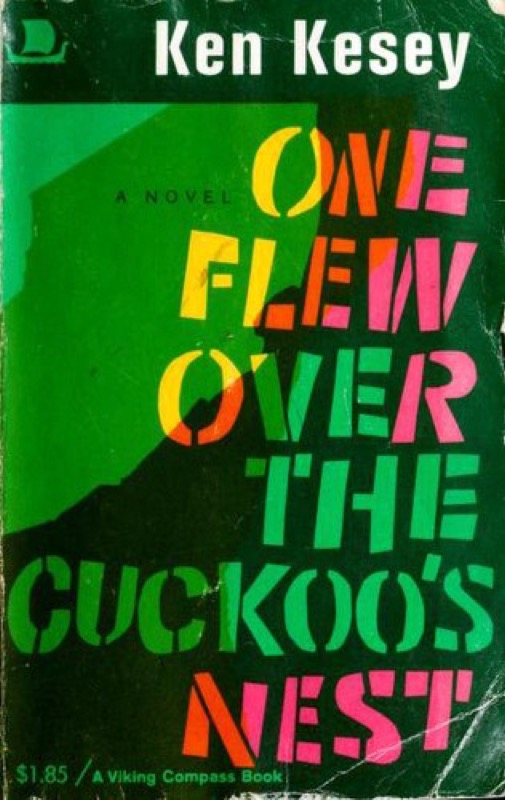
One Flew Over the Cuckoo’s Nest
Hook & thesis
Ken Kesey’s One Flew Over the Cuckoo’s Nest serves as a harrowing exploration of individuality against oppressive systems. The novel’s true engine lies in the battle between conformity and rebellion within the confines of a mental institution. Verdict: This is a profound commentary on the human spirit’s resilience, masterfully balancing dark humor with deep psychological insight.
The contextual pivot
Positioned within the dark-thriller genre, Kesey’s work stands as a cornerstone of American literature, intersecting with the themes of existentialism and social critique seen in works by authors like Joseph Heller and Sylvia Plath. By addressing mental illness through a lens of both tragedy and absurdity, Kesey bridges niche tropes with broader social concerns, appealing to readers who may not typically gravitate towards psychological narratives. This duality creates an invisible audience: those intrigued by the human psyche as well as those drawn to critiques of societal norms.
Deep-dive critique
Kesey employs a unique narrative structure through the unreliable perspective of Chief Bromden, whose hallucinations and fragmented thoughts create an immersive experience that reflects the chaotic environment of the asylum. The pacing expertly oscillates between moments of tension and levity, keeping the reader engaged while highlighting the absurdity of the characters’ realities. The dialogue is sharp and laden with subtext, revealing character motivations and societal critiques that extend beyond the confines of the ward. Notably, the character of Randle McMurphy embodies the archetypal hero, challenging the authoritarian Nurse Ratched, symbolizing the struggle against oppressive societal forces. However, while the novel’s climax is undeniably powerful, some may argue the ending, though poignant, feels abrupt, leaving questions about the broader implications of McMurphy’s rebellion and the fate of individualism.
Discussion launchpad
The novel’s exploration of mental illness and institutional abuse invites polarizing interpretations. What is the balance between humor and tragedy in the depiction of such serious themes? Additionally, how effectively does the novel critique societal norms without straying into sensationalism?
Questions for the room:
- Does Kesey’s portrayal of mental illness perpetuate stereotypes or challenge them?
- How does the novel’s setting influence your understanding of character motivations?
- In what ways does McMurphy’s rebellion resonate with contemporary struggles against authority?
- Is the ending of the novel a triumph or a tragedy for individualism?
- How does the narrative’s style affect your emotional engagement with the characters?
#LiteraryAnalysis #darkthriller #psychological #classic #theorchidroom