
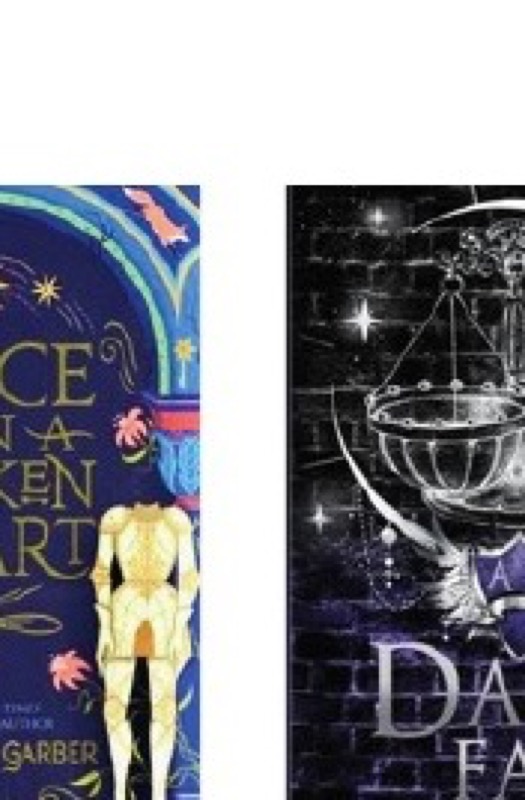
Once Upon a Broken Heart
Hook & thesis
In Once Upon a Broken Heart, Stephanie Garber weaves a tale of love intertwined with deception, where the cost of desire is measured in hearts and broken promises. Verdict: This novel masterfully uses fairy-tale tropes to explore the darker edges of love, making it an enchanting yet treacherous journey.
The contextual pivot
Nestled within the fantasy-romance genre, Garber’s work sits comfortably beside authors like Sarah J. Maas and Holly Black, both of whom similarly blend whimsy with darker thematic elements. Garber’s narrative, however, carves out a unique space that straddles the line between youthful fantasy and sinister reality, facilitating a bridge between niche fairy-tale enthusiasts and broader audiences who crave depth in their romantic escapades. The invisible audience here is likely composed of readers who revel in emotionally charged narratives and are drawn to the complexities of relationships tinged with betrayal and manipulation.
Deep-dive critique
Garber’s prose is vivid and evocative, painting a kaleidoscopic picture of her world while maintaining a rhythm that reflects the unpredictable nature of her characters’ desires. The pacing, particularly in the second half, accelerates in a manner that mirrors the protagonist’s spiraling emotions, successfully heightening tension. The choice of a first-person POV immerses the reader in the protagonist’s tumultuous journey, allowing us to experience her emotional manipulation firsthand. However, this perspective also limits the reader’s insight into other characters, sometimes rendering them as mere shadows in the protagonist’s growing drama.
The thematic exploration of betrayal resonates deeply, particularly through the lens of romantic entanglements. Garber’s characters navigate a landscape filled with hidden agendas, where love is synonymous with sacrifice. The dialogue crackles with tension, effectively portraying conflicts that arise from deeply buried desires. Nevertheless, the world-building, while imaginative, occasionally feels rushed, with certain elements left underexplored — particularly the mechanics of the magical curses that underpin the plot. The ending, while satisfying, invites scrutiny: is it a resolution or merely a pause in a larger cycle of heartbreak? This ambiguity offers both intrigue and frustration.
Discussion launchpad
Garber’s novel invites a rich tapestry of discussion, particularly in its treatment of love and manipulation, and how this shapes character motivations. The dichotomy of fairy-tale innocence versus dark reality could polarize readers, prompting debates on the ethics of love portrayed in the narrative.
Questions for the room:
- How do you perceive the balance between magical elements and emotional realism in the story?
- Do you find the protagonist’s journey resonant or problematic in its depiction of love?
- In what ways does the first-person POV enhance or limit the narrative’s complexity?
- How does Garber’s portrayal of betrayal challenge or reinforce traditional romantic tropes?
- What do you think of the ending — an empowerment or a cycle of despair?
#TheOrchidRoom #fantasyromance #darkromance #literaryanalysis #OnceUponABrokenHeart