
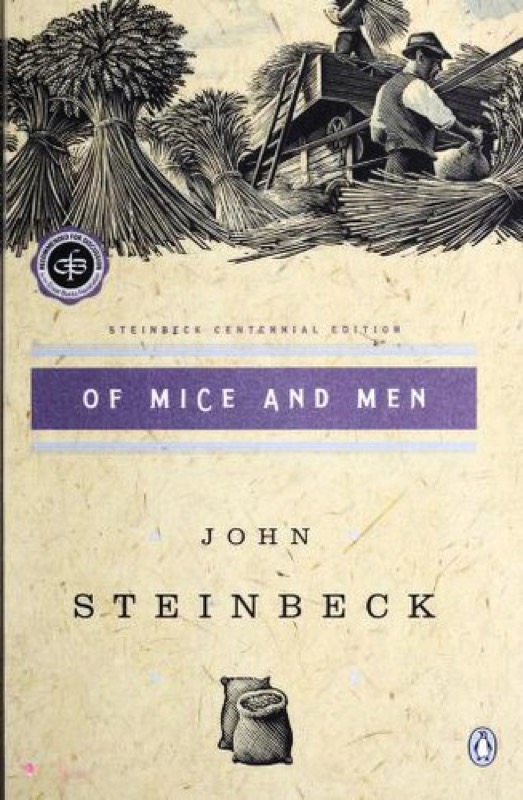
Of Mice and Men
Hook & thesis
John Steinbeck’s Of Mice and Men masterfully explores the fragility of dreams amid the harsh realities of the Great Depression. Verdict: Steinbeck’s poignant depiction of friendship and aspiration renders a timeless narrative that resonates deeply with the human condition.
The contextual pivot
Positioned in the genre of American realism, Of Mice and Men reflects the socio-economic struggles of the 1930s, paralleling works by authors like Ernest Hemingway and F. Scott Fitzgerald. Steinbeck sheds light on marginalized individuals, making this a bridge between niche literary themes and broader societal issues. The invisible audience includes those striving for understanding amid personal and communal hardships, a recurring motif in Steinbeck’s oeuvre.
Deep-dive critique
The structure of Of Mice and Men is tightly woven, utilizing a linear timeline that emphasizes the inevitability of fate. The dual perspectives of George and Lennie create a rich narrative layer that heightens emotional tension. Steinbeck’s prose is both lyrical and stark, effectively reflecting the desolation of the setting; phrases like “the ranch was a prison” encapsulate the characters’ confinement in their circumstances. Dialogue plays a crucial role, revealing the characters’ dreams and vulnerabilities, particularly through Lennie’s childlike innocence and George’s protective demeanor. However, the abrupt ending, while impactful, might leave some readers feeling unfulfilled, stirring debate over whether it is earned or just a reflection of grim reality.
Discussion launchpad
Steinbeck’s exploration of dreams versus reality presents polarizing viewpoints, particularly regarding the characters’ fates.
Questions for the room:
- Does the tragic ending serve to reinforce the novel’s themes of hopelessness, or does it offer a critique of society’s failure?
- How do George and Lennie’s relationship dynamics reflect broader societal issues?
- In what ways does Steinbeck challenge the reader’s perception of morality through his characters?
- What role does mental illness play in the narrative, and how is it portrayed?
- Can the novel’s themes still be relevant today, and if so, how?
#LitClass #Grade11 #RequiredReading #AmericanClassic #Friendship