
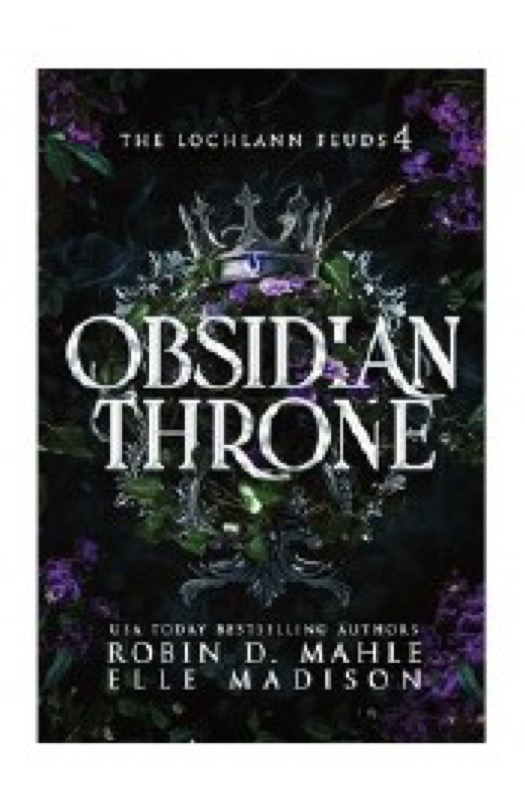
Obsidian Throne
The Lochlann Feuds — Book 4
Hook & thesis
In Obsidian Throne, Robin D. Mahle and Elle Madison weave a tapestry of ambition and betrayal set against a backdrop of war-torn landscapes and royal intrigue. The authors’ primary objective is to explore the depths of desire and the lengths characters will go to claim power, love, and vengeance. Verdict: This book is a masterclass in tension and layered human conflict, gripping readers with its dark romantic undercurrents.
The contextual pivot
As the fourth installment in The Lochlann Feuds, this novel continues the series’ exploration of familial and political strife, solidifying its place within the fantasy-romance genre. Unlike its predecessors, which laid the groundwork for conflict and character development, Obsidian Throne escalates the stakes, offering a rich narrative that intertwines courtly politics with passionate entanglements. The authors maneuver through familiar tropes—feuding families, royal decrees, and clandestine affairs—while simultaneously appealing to a broader audience, potentially attracting readers who venture beyond the niche of fantasy. The combination of romantic and fantastical elements transcends the genre, inviting readers of high fantasy and dark romance alike to indulge in its complexities.
Deep-dive critique
The structure of Obsidian Throne effectively mirrors its thematic undercurrents. The dual perspectives allow for a nuanced exploration of desire, weaving together the motivations of both protagonists, each driven by their own agendas amid the chaos of war. This choice not only enriches character depth but also heightens tension, as the reader navigates their shifting loyalties and secret machinations. The pacing, particularly in the latter chapters, races towards an explosive climax that feels both earned and inevitable.
Craft-wise, Mahle and Madison excel in building romantic tension through evocative prose and dialogue that crackles with unspoken desire. The characters’ interactions are rife with subtext, making even the simplest exchanges fraught with meaning. However, some mechanical flaws emerge in the form of pacing inconsistencies; certain plot points could benefit from further development, leaving the resolution of key conflicts feeling somewhat rushed. The world-building is richly detailed, yet at times, the myriad characters introduced can be overwhelming, risking reader attachment to pivotal figures.
Discussion launchpad
Obsidian Throne straddles the line between romance and intrigue, sparking discussions on the nature of ambition and the morality of betrayal within relationships. Its themes provoke questions about loyalty, power, and the sacrifices characters make for love.
Questions for the room:
- How do the dual perspectives shape your understanding of loyalty and betrayal in the narrative?
- What do you think about the pacing in the latter sections of the book? Did it enhance or detract from your experience?
- In what ways do the authors subvert typical fantasy-romance tropes, and how does that impact your engagement with the story?
- How does the portrayal of violence and war inform the romantic elements of the plot?
- Can you identify any moments where the character’s desires conflict with their moral compasses? How does this influence your perception of them?
#TheOrchidRoom #fantasyromance #darkromance #highfantasy #literaryanalysis