
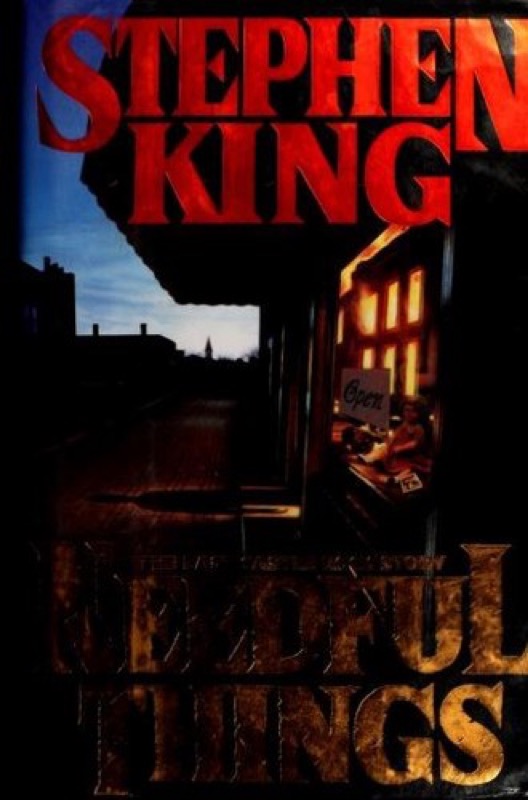
Needful Things
Hook & thesis
Stephen King’s Needful Things serves as a haunting exploration of human greed and the darkness that festers in a small town, showcasing how the trivial can become the catalyst for chaos. Verdict: This novel is a masterclass in intertwining the mundane with the malevolent, revealing that the true horror lies not in the supernatural, but in our own vulnerabilities.
The contextual pivot
As a dark-thriller, Needful Things fits within King’s oeuvre, where the ordinary is upended by the extraordinary. It echoes the thematic concerns found in other King works, such as It and The Stand, focusing on the undercurrents of evil lurking in seemingly peaceful settings. This book’s invisible audience likely comprises both horror aficionados and those drawn to character-driven narratives featuring moral dilemmas, effectively bridging niche tropes with broader themes of obsession and community disintegration.
Deep-dive critique
The structure of Needful Things unfolds through a multi-perspective narrative, with King deftly utilizing an ensemble cast to deepen the sense of entrapment within the town of Castle Rock. This pacing not only builds suspense but also allows readers to witness the cascading effects of the titular shop’s influence on each character, serving as a solid vehicle for the exploration of themes like manipulation and desire. King’s prose excels in creating vivid imagery and psychological depth, particularly in his portrayal of Leland Gaunt, the antagonist whose charm masks a sinister intent. However, the dialogue occasionally leans into caricature, which, while heightening tension, can detract from the authenticity of character interactions. The ending, where chaos erupts, feels both earned and inevitable, as the moral decay rooted in each character’s choices culminates in a shared catastrophe, mirroring the broader societal decay.
Discussion launchpad
Needful Things invites rich discussions around the nature of desire and the moral implications of choice. The novel’s portrayal of community dynamics raises questions about complicity and accountability in the face of evil.
Questions for the room:
- How does King’s portrayal of Castle Rock reflect broader societal issues?
- What role does nostalgia play in the characters’ motivations, and can it be deemed a character in itself?
- In what ways does the supernatural serve as a metaphor for real-world vices in this narrative?
- Can we sympathize with the characters despite their moral failings, and what does that say about human nature?
- How effective is the use of multiple perspectives in driving the narrative’s tension?
#LiteraryAnalysis #darkthriller #supernatural #obsession #theorchidroom