
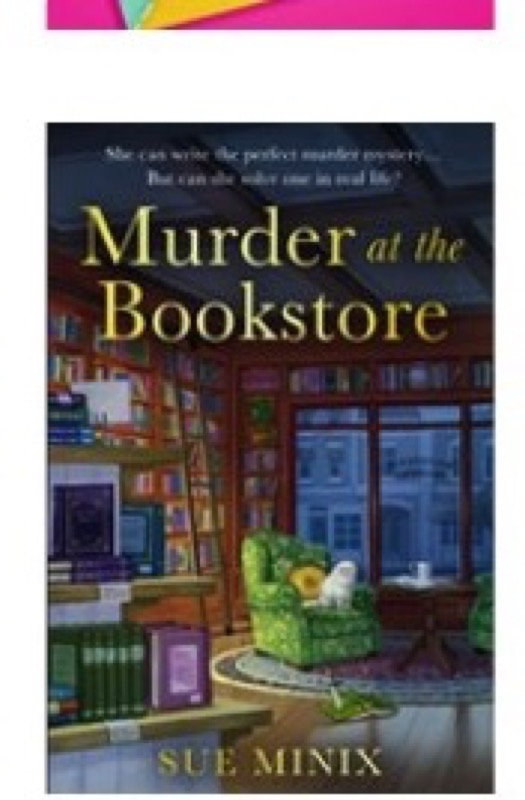
Murder at the Bookstore
She can write the perfect murder mystery... But can she solve one in real life?
Hook & thesis
In Murder at the Bookstore, Sue Minix crafts a dark-thriller that blurs the lines between fiction and reality as a writer grapples with the consequences of her own narrative. Verdict: This novel deftly explores the psychological intricacies of creativity and culpability, though its pacing occasionally stumbles under the weight of its ambitious themes.
The contextual pivot
Positioned within the cozy mystery and romantic suspense genres, Minix’s work draws comparisons to the likes of Sophie Hannah and Agatha Christie, albeit with a modern twist that incorporates elements of self-reflexivity. The protagonist’s dual role as a writer and amateur sleuth serves as a bridge for both niche readers who revel in meta-commentary and general audiences seeking suspense intertwined with literary exploration. By setting the story in a bookstore, Minix not only taps into the familiar sanctuary of readers but also heightens the stakes by placing the protagonist in an environment where fiction and reality collide.
Deep-dive critique
The novel’s structure oscillates between the protagonist’s internal monologue and the external action, which sometimes disrupts the pacing. While the shifting perspectives effectively convey the protagonist’s psychological turmoil, they can also lead to moments of confusion that detract from the narrative flow. Minix’s prose is often sharp and insightful, particularly in its exploration of the protagonist’s fears and motivations, yet there are instances where dialogue feels stilted, failing to fully embody the characters’ emotional depth.
The thematic core of the book, which confronts the idea of authorial control and the morality of storytelling, is compelling. However, the execution falters slightly in the latter half, where the resolution feels rushed and lacks the necessary buildup to feel earned. The incorporation of the cat, a staple of cozy mysteries, cleverly adds warmth but risks overshadowing the darker, more intricate themes at play. Overall, while the novel raises thought-provoking questions about the nature of evil and creativity, it occasionally sacrifices narrative cohesion for thematic ambition.
Discussion launchpad
Minix’s novel presents a rich ground for debate, particularly around how effectively it navigates its dual identity as both a thriller and a commentary on the writing process. The shifts in tone and pacing may divide readers, prompting questions about the balance between character development and plot progression.
Questions for the room:
- How does the duality of the protagonist as both writer and detective enhance or undermine the story’s tension?
- In what ways does the bookstore setting serve as a character in itself?
- Can the novel’s exploration of moral ambiguity in storytelling resonate universally, or is it limited to a niche audience?
- Is the ending satisfying or does it leave too many threads unresolved?
- How effectively does Minix balance the elements of dark thriller with cozy mystery tropes?
#LiteraryAnalysis #darkthriller #romanticsuspense #cozymystery #darkheartlabs