
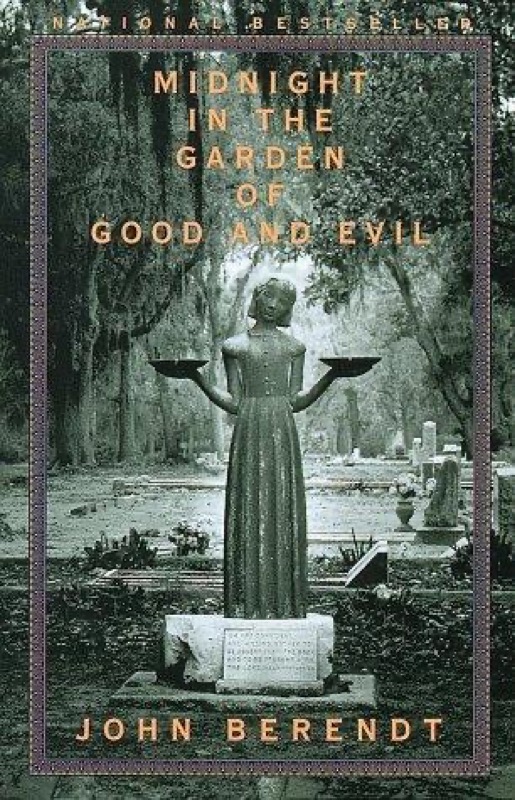
Midnight in the Garden of Good and Evil
Hook & thesis
In Midnight in the Garden of Good and Evil, John Berendt crafts a beguiling tapestry of Southern Gothic charm entwined with dark secrets, exposing the unsettling underbelly of Savannah, Georgia. Verdict: This book is a masterclass in atmospheric storytelling that reveals the haunting duality of human nature, where civility masks a sinister reality.
The contextual pivot
Berendt’s work occupies a unique niche within the Southern Gothic genre, blending true crime with rich character studies that reflect the region’s complex social fabric. This book stands alongside the likes of Flannery O’Connor and Carson McCullers, yet it uniquely melds the allure of personal memoir with investigative journalism. It targets an audience that revels in the macabre undercurrents of genteel society, bridging niche tropes to a broader readership captivated by the intricacies of human morality and societal facades.
Deep-dive critique
The structure of Midnight in the Garden of Good and Evil is non-linear, unfolding like a series of vignettes that draw the reader deeper into the twisted narratives of Savannah’s residents. Berendt’s pacing is deliberate, allowing tension to simmer and bubble beneath the surface, particularly in his portrayal of Jim Williams, a wealthy Savannah socialite embroiled in a murder trial. This slow reveal serves to heighten the thematic exploration of duality—between public persona and private vice.
Berendt’s prose is rich and evocative, capturing the haunting beauty of Savannah while also exposing its moral decay. The dialogue crackles with Southern wit, though at times it veers into caricature, risking the authenticity of its characters. The world-building is immersive, steeped in the local culture and history, which enhances the narrative’s gothic allure. However, the reliance on eccentric characters can feel uneven, as some, like the voodoo priestess, seem to serve more as spectacle than substance.
The ending, while climactic, leaves an unsettling ambiguity that mirrors the book’s exploration of truth. This choice reinforces the notion that reality is often more bizarre than fiction, inviting readers to ponder the unresolved moral questions that linger long after the last page is turned.
Discussion launchpad
Berendt’s narrative invites contemplation on the dichotomy of good versus evil, particularly within the context of societal expectations. The book’s Southern Gothic lens challenges readers to confront the darkness that lurks beneath polished façades, a theme ripe for debate.
Questions for the room:
- How does Berendt’s portrayal of Savannah challenge or reinforce typical Southern Gothic stereotypes?
- In what ways does the author blur the lines between fact and fiction?
- Is the duality of the characters a reflection of society as a whole, and what implications does that have?
- How does the non-linear structure enhance or detract from the overall impact of the narrative?
- What unresolved questions linger after the book’s conclusion, and how do they affect your interpretation?
#LiteraryAnalysis #GothicEdge #darkthriller #southerngothic #theorchidroom