
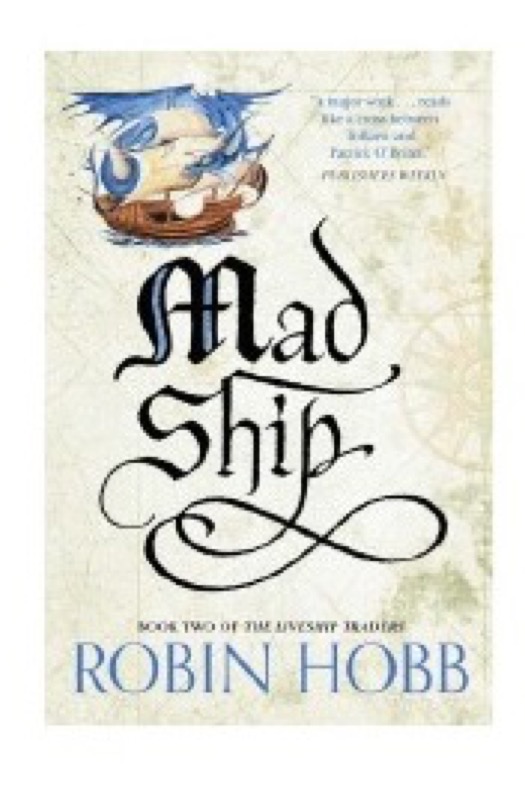
Mad Ship
Book Two of the Liveship Traders
Hook & thesis
In Mad Ship, Robin Hobb weaves a tale of longing and transformation against the backdrop of a richly constructed world, where ships are imbued with the souls of their deceased captains. Verdict: Hobb masterfully explores the churning depths of desire and betrayal, making this volume not just a continuation of a saga, but a profound examination of the human condition.
The contextual pivot
As the second book in the Liveship Traders trilogy, Mad Ship firmly situates itself within the fantasy romance genre, extending beyond mere adventure into the psychological landscapes of its characters. Hobb’s narrative blends elements of dark romance with themes of emotional intensity, positioning her work alongside authors like Anne Bishop and Patrick Rothfuss, who similarly manipulate intricate relationships amidst fantastical settings. The novel’s invisible audience seems to oscillate between dedicated fantasy aficionados and readers drawn to the intimate narratives often reserved for romance, bridging niche tropes to captivate a broader readership.
Deep-dive critique
Hobb’s structural choices enhance the thematic core of Mad Ship. The dual perspectives provide a multifaceted view of desire—both yearning and destructive—creating a rich tapestry of tension that propels the story forward. The pacing is deliberate; moments of quiet introspection are interspersed with bursts of action, reflecting the unpredictable nature of the characters’ emotional journeys. Hobb’s prose is both lyrical and incisive, crafting dialogues that resonate with authenticity and depth. For instance, the way characters grapple with their identities and relationships to the sentient ships underscores a central conflict: the tension between autonomy and connection.
However, the novel is not without its flaws. While the world-building is immersive, some may find certain subplots meandering, potentially losing the reader’s engagement amid the intricate web of relationships. The emotional stakes, though often high, can feel repetitive at times, leading to a pacing that occasionally stumbles. Nevertheless, the concluding arc is satisfying, with character arcs that feel earned and reflective of the journey traversed. Hobb’s ability to intertwine character development with a larger narrative about loyalty and sacrifice elevates the story beyond genre expectations.
Discussion launchpad
Mad Ship invites rich discussion on its exploration of desire and the consequences that arise from it, particularly in the context of relationships defined by complexity and emotional depth.
Questions for the room:
- How do Hobb’s characters reflect the conflict between freedom and obligation in their relationships?
- In what ways do the sentient ships serve as metaphors for emotional entanglements?
- Can you identify moments in the narrative where the pacing detracts from the emotional impact?
- How does Hobb’s portrayal of fantasy violence inform our understanding of her characters’ desires?
- Is the emotional intensity portrayed a strength that draws readers in, or does it risk overwhelming them with its weight?
#TheOrchidRoom #fantasyromance #darkromance #mad #ship