
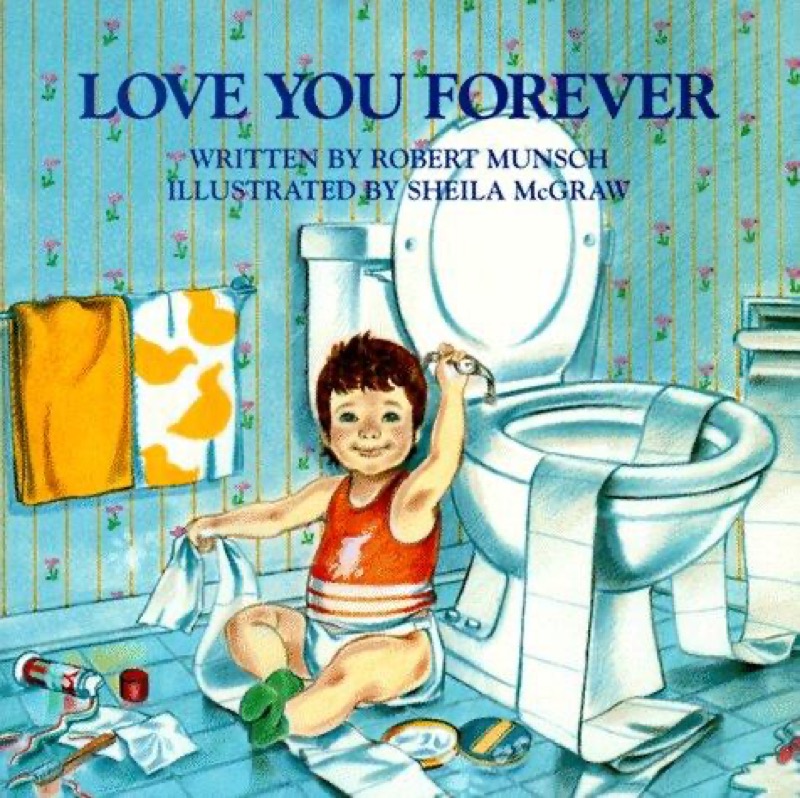
Love You Forever
Hook & thesis
In Robert Munsch’s “Love You Forever,” the haunting complexity of love is explored through a lens of obsession and familial ties that transcends the boundaries of conventional romance. Verdict: This book’s exploration of love’s darker facets makes it a potent meditation on the nature of attachment and loss, straddling the line between affection and obsession.
The contextual pivot
Situated within the forbidden-love subgenre, Munsch’s work stands apart for its poignant blend of sweetness and unsettling undertones. While ostensibly a children’s book, it imbues a depth that invites adult readers to grapple with the darker sides of familial love, making it a curious bridge between niche emotional narratives and broader themes of attachment. Munsch’s oeuvre often delves into the complexities of relationships, but here he navigates the terrain of parental obsession, making it a unique entry in his body of work.
Deep-dive critique
The structure of “Love You Forever” employs a cyclical narrative that echoes the themes of timelessness and recurrence in relationships. By using a third-person omniscient point of view, Munsch creates an intimate distance that allows readers to both witness and critique the protagonist’s actions. The repetition of the phrase “I’ll love you forever” serves as a haunting refrain that encapsulates the duality of unconditional love—its warmth tinged with an unsettling possessiveness.
Munsch’s prose is deceptively simple, yet it conveys profound emotional weight. The illustrations, frequently described as whimsical, contrast sharply with the darker themes present in the text, creating a dissonance that heightens the reader’s emotional engagement. The dialogue, sparse yet impactful, reveals character motivations while simultaneously leaving room for interpretation. However, the pacing falters in the latter half, as the narrative’s intensity shifts focus almost too abruptly, causing a disconnect between the emotional peak and the resolution.
The thematic success lies in Munsch’s ability to articulate the complexities of love without offering easy resolutions. The ending, while touching, raises questions about the ethics of attachment, challenging readers to consider where love ends and possessiveness begins. The visceral longing represented in the text resonates deeply, making the reader reflect on their own experiences of love and loss.
Discussion launchpad
“Love You Forever” provokes a rich tapestry of emotional responses and ethical dilemmas, ensuring that discussions about its content are both heated and introspective. The juxtaposition of affection and obsession is likely to divide opinions.
Questions for the room:
- In what ways does the book challenge traditional notions of parental love?
- How do the illustrations shape or complicate your understanding of the narrative?
- Can love ever become too possessive, and if so, where is the line drawn?
- Does the cyclical structure enhance or detract from the story’s emotional impact?
- How does Munsch’s treatment of love resonate with or contradict contemporary views on relationships?
#TheOrchidRoom #forbiddenlove #darkromance #timeless #emotional