
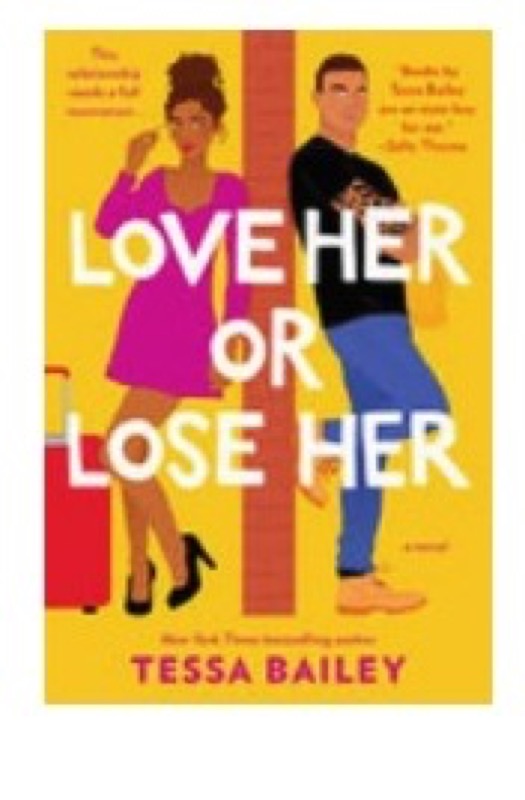
Love Her or Lose Her
This relationship needs a full renovation...
Hook & thesis
In Tessa Bailey’s Love Her or Lose Her, the crumbling foundation of a marriage serves as the battleground for a fierce exploration of desire and identity. Verdict: This novel masterfully dissects the tension between passion and stability, revealing that the heart thrives on both chaos and intimacy.
The contextual pivot
Situated firmly within the enemies-to-lovers subgenre, Bailey’s work resonates with readers who crave a blend of dark romance and relatable marital strife. This narrative stands as a testament to the author’s ability to weave complex emotional tapestries, much like her previous works that often navigate the turbulent waters of love in its various forms. The invisible audience likely consists of readers drawn to the intricacies of relationships, particularly those who relish the tension and heat that often accompany the push and pull of intimate partnerships. Bailey bridges the niche of dark romance with a broader appeal by grounding her characters’ conflicts in universal themes of longing and redemption.
Deep-dive critique
Bailey employs a dual perspective that enhances the intensity of the emotional conflict. The alternating points of view allow readers to engage intimately with both protagonists, illuminating their vulnerabilities and desires. The pacing, however, fluctuates; moments of heightened tension occasionally give way to stretches of introspection that may challenge readers seeking continuous momentum. Yet, it is precisely this ebb and flow that mirrors the complexities of real relationships, underscoring themes of reconciliation and self-discovery.
The prose strikes a compelling balance between raw, visceral language and moments of soft reflection. Bailey’s dialogue crackles with wit, while her descriptions of physical intimacy are laden with an undercurrent of both urgency and tenderness. The world-building, though primarily focused on emotional landscapes rather than physical settings, immerses the reader in the characters’ psychological states, making their journey palpable.
The resolution, while satisfying, raises questions about its authenticity. Are the characters’ transformations genuinely earned, or do they rely too heavily on traditional romance tropes? The ending suggests a hopeful future, yet it also risks falling into the trap of romantic idealism, where growth feels more like a reset than a true evolution.
Discussion launchpad
The tension between passion and stability in Bailey’s narrative invites polarizing discussions among readers. Some may find the portrayal of marital conflict relatable and grounding, while others could argue it simplifies deeper issues surrounding love and commitment.
Questions for the room:
- Does Bailey’s depiction of love and conflict resonate with your own experiences in relationships?
- How do the characters’ flaws contribute to or detract from the authenticity of their growth?
- In what ways does the novel challenge or reinforce traditional romantic tropes?
- Is the balance between chaos and intimacy successfully navigated, or does it skew too far in one direction?
- How does Bailey’s writing style enhance or hinder the emotional stakes of the story?
#TheOrchidRoom #enemiestolovers #darkromance #marriage #literaryanalysis