
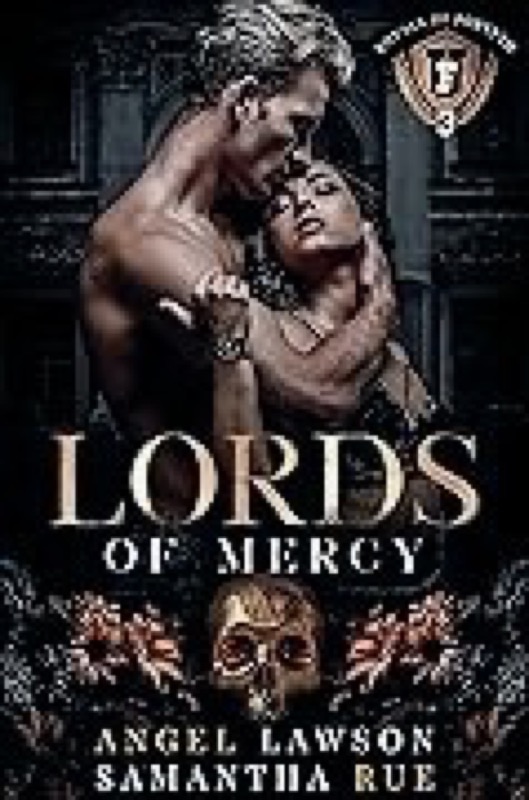
Lords of Mercy
Royals of Forsyth — Book 3
Hook & thesis
In Lords of Mercy, Angel Lawson and Samantha Rue plunge the reader into a world where power, desire, and trauma intertwine within the dark corridors of elite privilege. The authors’ primary objective is to explore the psychosexual dynamics of bullying and redemption against a backdrop of gothic splendor. Verdict: This book masterfully exposes the perilous allure of toxic relationships, leaving readers both captivated and unsettled.
The contextual pivot
Positioned within the bully-romance subgenre, Lords of Mercy stands out for its intricate exploration of dark themes through the lens of a reverse harem. It shares a kinship with titles like The Cruel Prince by Holly Black and Twisted Love by Ana Huang, but it pushes boundaries further into the realm of psychological complexity. Lawson and Rue deftly navigate the tightrope between niche tropes and broader appeal, making the book accessible to those who may shy away from more explicit portrayals of violence and power dynamics. The invisible audience spans both seasoned readers of dark romance and curious newcomers, eager to delve into the morally ambiguous relationships that define this series.
Deep-dive critique
The novel’s structure is both its strength and potential point of contention. Lawson and Rue employ a dual perspective, oscillating between the protagonists to convey their inner turmoil and desires, which enhances the emotional weight of each character’s journey. However, at times, this shifting perspective disrupts the narrative flow, leading to moments of disorientation that may alienate some readers. The pacing fluctuates, with certain sections brimming with tension while others meander, potentially detracting from the escalating stakes.
The prose is lush and evocative, effectively painting a world steeped in opulence and danger. Descriptions of the Forsyth estate drip with an unsettling beauty that mirrors the characters’ tumultuous emotions. Yet, the dialogue occasionally falls into cliché, undermining the authenticity of the characters’ experiences. The thematic exploration of power imbalance is particularly resonant; the authors craft a vivid portrayal of how desire can be weaponized in relationships marked by cruelty, transforming the characters’ struggles into a reflection of broader societal issues. The ending, while shocking, feels both earned and slightly abrupt, leaving readers in a liminal space that provokes further contemplation.
Discussion launchpad
Lords of Mercy presents polarizing elements that can ignite passionate debates among readers. The moral ambiguity of the characters and their choices raises questions about the glorification of toxic relationships in contemporary romance.
Questions for the room:
- How do we reconcile the allure of dark romance with our understanding of healthy relationships?
- Can the portrayal of bullying and power dynamics serve as a critique of societal norms, or does it risk romanticizing toxic behavior?
- In what ways do the dual perspectives enhance or detract from the emotional stakes of the narrative?
- Does the novel offer a sufficient resolution to the characters’ arcs, or does it leave too many questions unanswered?
- How does the gothic setting contribute to the overall themes of power and desire?
#TheOrchidRoom #bullyromance #darkromance #gothic #literaryanalysis