
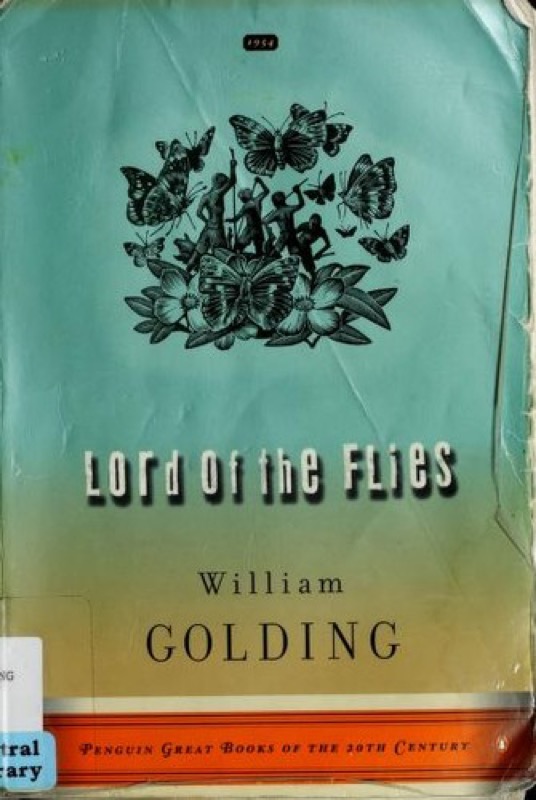
Lord of the Flies
Hook & thesis
William Golding’s Lord of the Flies serves as a chilling examination of human nature when stripped of societal constraints. Verdict: The novel compellingly argues that the darkness within humanity emerges not from external influences but from within, revealing a harrowing truth about civilization’s fragility.
The contextual pivot
Positioned within the realm of dystopian literature, Lord of the Flies not only encapsulates a survival narrative but also delves into psychological horror and moral philosophy. Golding, through this work, invites readers to witness the descent into savagery, making it a pivotal entry in the genre of dark thrillers. Unlike contemporaries such as William Golding’s own The Inheritors, which explores pre-human civilization, Lord of the Flies directly confronts modernity’s underlying chaos, appealing to a broad audience while maintaining niche themes relevant to those fascinated by the human psyche.
Deep-dive critique
The novel employs an omniscient third-person perspective, allowing for a comprehensive exploration of the boys’ descent into chaos, though this occasionally hampers personal connection with characters. The pacing, particularly in the latter half, accelerates as tensions rise, effectively mirroring the escalating conflict among the boys. Golding’s characterizations are stark yet memorable; Ralph’s idealism and Jack’s primal instincts serve as opposing forces representing civilization and savagery. Symbolism is a standout craft choice — the conch shell signifies order and authority, while the ‘beast’ embodies the primal fears lurking within each boy, illustrating the theme of innate human savagery. However, some readers may find the dialogue simplistic and the characterization occasionally one-dimensional, mirroring the loss of innocence in the boys’ transformation. The climax and ending, while intense, may leave some feeling unresolved, serving as a haunting reminder of the darkness that can emerge under duress.
Discussion launchpad
The moral implications of Lord of the Flies can ignite passionate debate among readers, particularly concerning the nature of humanity and civilization. Questions for the room:
- Does Golding suggest that civilization is merely a thin veneer over primal instincts?
- How does the portrayal of children influence our understanding of innate human nature?
- In what ways does the novel reflect or challenge contemporary societal issues?
- Is the ending of the novel ultimately hopeful or despairing regarding human nature?
- How do the symbols used throughout the novel contribute to its overall message?
#LitClass #Grade11 #RequiredReading #darkthriller #literaryanalysis