
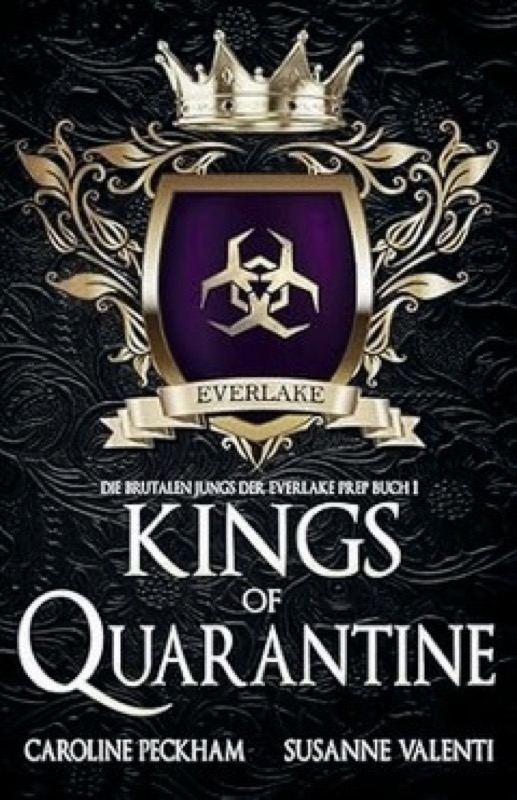
Kings of Quarantine
Die Brutalen Jungs der Everlake Prep Buch 1
Hook & thesis
In “Kings of Quarantine,” Caroline Peckham and Susanne Valenti deftly weave a tale of power struggles and emotional entanglements set against the backdrop of a pandemic-fueled isolation. The true engine of this narrative lies in the exploration of toxic relationships and the dynamics of dominance, making readers question the cost of desire. Verdict: This book provocatively examines how love can thrive in chaos, but it risks glorifying the very toxicity it seeks to critique.
The contextual pivot
This novel firmly plants itself within the bully-romance subgenre, a niche that has gained traction among readers seeking a blend of dark themes and romantic escapism. Peckham and Valenti join the ranks of authors like Tijan and Penelope Douglas, who similarly explore the complexities of youthful passion entangled with bullying and emotional manipulation. However, “Kings of Quarantine” uniquely infuses pandemic themes, offering a contemporary twist that resonates with today’s readers. The authors deftly bridge the gap between niche tropes and a broader audience, tapping into fears and desires heightened by real-world circumstances, which may either alienate or enthrall traditional romance readers.
Deep-dive critique
The structure of “Kings of Quarantine” is an intricate web of perspectives, allowing readers to delve into the psyche of its complex characters. The alternating points of view effectively heighten tension and empathy, though at times the pacing falters, particularly in the middle sections where internal monologues overshadow plot progression. The prose is sharp and evocative, with moments of raw vulnerability that contrast starkly with the brutal behaviors exhibited by the characters. This juxtaposition serves to amplify the thematic exploration of toxic relationships; however, the dialogue occasionally leans towards melodrama, undermining the authenticity of character development.
The world-building, while initially immersive, becomes increasingly reliant on familiar tropes of the academy setting, which could leave astute readers craving more originality. The authors excel in creating an atmosphere laden with tension, yet the resolution feels rushed and unearned, leaving critical questions about character growth and moral ambiguity unresolved. The climax, while intense, falls short of providing a satisfying payoff for the emotional investment established throughout the narrative.
Discussion launchpad
The novel’s exploration of toxic relationships presents rich ground for discussion, particularly in how it navigates the fine line between romance and abuse. Are the characters’ actions justified by their desires, or do they perpetuate harmful stereotypes?
Questions for the room:
- How does the portrayal of bullying resonate with real-life experiences, and what implications does this have for the romanticization of such behavior?
- In what ways do the pandemic themes influence the characters’ development and the story’s overall message?
- Can we separate the thrill of forbidden love from the moral implications of toxic dynamics presented in the narrative?
- How do you perceive the ending in terms of character redemption or failure?
- What elements of the authors’ writing style either enhance or detract from the overall impact of the story?
#TheOrchidRoom #bullyromance #darkromance #everlakeprep #reverseharem