
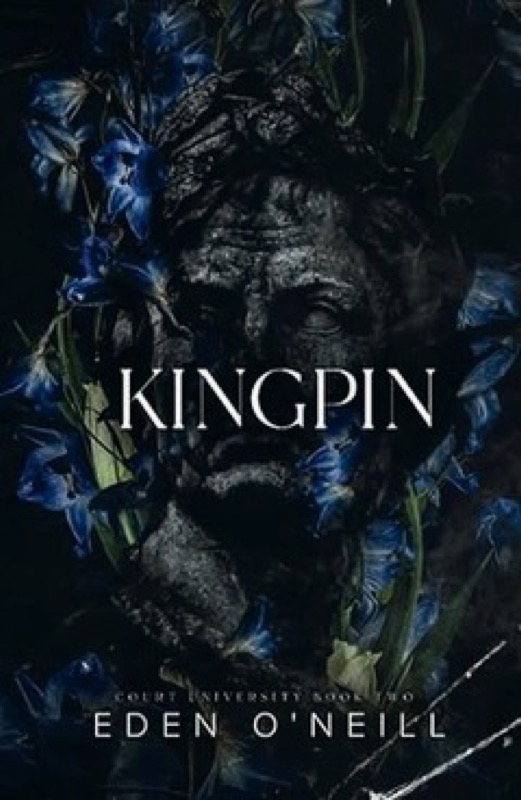
Kingpin
Court University Book Two
Hook & thesis
Eden O’Neill’s Kingpin artfully navigates the treacherous waters of obsession and power dynamics within the hallowed halls of Court University, revealing how desire can warp the boundaries between love and control. Verdict: This novel is a thrilling exploration of the dark undercurrents of human relationships that leaves the reader questioning the ethical boundaries of passion.
The contextual pivot
Kingpin, as a notable entry in the bully-romance subgenre, stands alongside works by authors like Penelope Douglas and Tijan, who similarly delve into the complexities of dark relationships in academic settings. O’Neill’s narrative balances niche tropes with broader themes of obsession and power, making her work accessible to both devoted followers of the genre and casual readers. The college backdrop serves as a fertile ground for the exploration of these themes, amplifying the stakes inherent in the dynamics of youth, ambition, and the blurred lines between affection and abuse.
Deep-dive critique
In Kingpin, O’Neill employs a dual narrative perspective that allows readers to glimpse the conflicting motivations of both protagonists, enhancing the tension that lies at the heart of their relationship. This structure effectively mirrors the chaotic emotional landscape of the characters, emphasizing the power imbalance that defines their interactions. The pacing, however, occasionally falters; certain passages linger too long in internal monologue, which can disrupt the momentum and dilute the urgency of the central conflict.
The prose shines in moments of stark imagery and visceral descriptions that evoke the gothic romance aesthetic—think shadowy corridors and electric touches. Yet, other sections can feel overwrought, as if O’Neill is straddling the line between poetic expression and narrative clutter. Dialogue often crackles with tension, revealing the characters’ vulnerabilities, though at times it dips into cliché, undermining the novel’s emotional authenticity. The world-building within Court University is richly detailed, yet could benefit from deeper exploration of the supporting characters, who occasionally serve as mere props in the protagonists’ drama.
The conclusion, while impactful, hinges on a sudden revelation that may feel unearned to some; it challenges the reader to reconcile the characters’ darker impulses with their desires for redemption or connection. This dissonance invites questions about the nature of love and whether it can exist in the shadow of manipulation.
Discussion launchpad
While Kingpin masterfully explores themes of obsession and power, it also raises uncomfortable questions about morality in romance. The tension between attraction and toxicity is palpable, inviting varied interpretations of the characters’ choices.
Questions for the room:
- How do the power dynamics in Kingpin challenge or reinforce societal norms about relationships?
- In what ways does the dual perspective enhance or detract from the overall narrative?
- Can redemption coexist with the darker elements present in the relationship dynamics?
- How does O’Neill’s portrayal of college life shape our understanding of the characters’ actions and desires?
- Do you see the ending as a critique of the relationship, or does it romanticize toxicity?
#TheOrchidRoom #bullyromance #darkromance #courtuniversity #literaryanalysis