
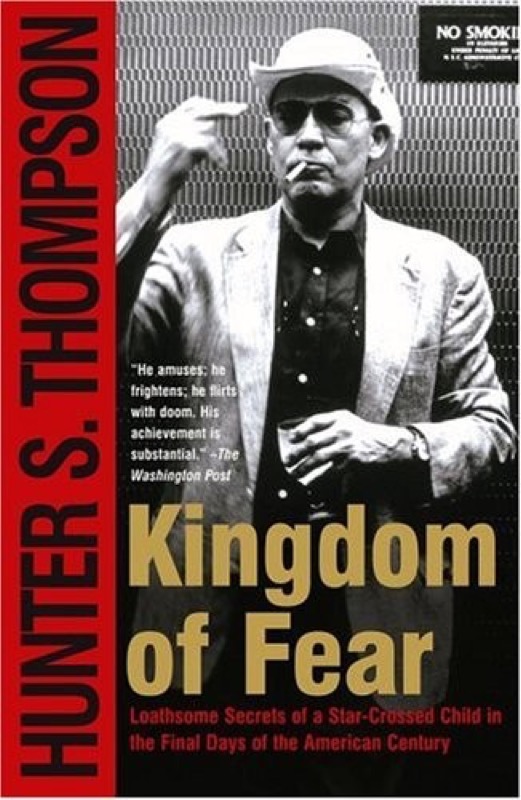
Kingdom of Fear: Loathsome Secrets of a Star-Crossed Child in the Final Days of the American Century
Hook & thesis
Hunter S. Thompson’s Kingdom of Fear serves as a blistering memoir that dissects the decay of American culture through the lens of his chaotic life and turbulent times. Verdict: This book is a harrowing exploration of fear and loathing that exposes the rot at the core of the American dream, leaving the reader grappling with the grotesque truths lurking beneath the surface.
The contextual pivot
Positioned within the dark-thriller genre, Thompson’s work bridges the raucous energy of gonzo journalism with deeply personal memoir elements, making it both a critique of society and a self-examination. Unlike traditional thrillers that offer a clear narrative arc, Kingdom of Fear immerses the reader in the chaotic, drug-fueled mind of its author, reminiscent of Charles Bukowski’s raw introspection and the acerbic wit found in works by Bret Easton Ellis. Thompson’s audience is those familiar with the underbelly of American life, yet his visceral prose seeks to engage broader readers by exposing the pervasive violence and absurdity of existence in a disenchanted world.
Deep-dive critique
Structurally, Thompson’s nonlinear narrative mirrors the fragmented state of his psyche, effectively capturing the manic urgency of his experiences. The pacing fluctuates wildly, with moments of frenetic energy juxtaposed against stark, contemplative passages that challenge the reader to reflect on the nature of fear and societal collapse. His use of a first-person point of view immerses readers into a world colored by substance abuse and mental anguish, effectively creating a sense of claustrophobia that heightens the book’s impact. However, this deeply personal lens can also alienate some readers who may struggle with the relentless dive into the grotesque, leaving them questioning the merit of such chaos. Thompson’s prose, sharp and often poetic, excels in its dark humor, yet it occasionally veers into self-indulgence, which can detract from the thematic resonance. The ending, a powerful contemplation of mortality and the American dream’s demise, is both earned and unsettling, leaving lingering questions that haunt the reader.
Discussion launchpad
The blend of memoir and political commentary in Kingdom of Fear creates a rich ground for debate, particularly around the following polarities:
- The value of chaotic storytelling versus structured narratives in driving home a message.
- Can humor effectively mask the trauma and violence depicted in the text, or does it trivialize serious issues?
- The impact of Thompson’s style on the reader’s perception of reliability in memoir writing.
Questions for the room:
- How does Thompson’s portrayal of American culture resonate with today’s societal issues?
- In what ways do you think humor plays a role in the heavy themes of substance abuse and violence?
- Do you find Thompson’s chaos engaging or overwhelming, and why?
- How does the book’s structure affect your understanding of the main themes?
- What unresolved issues or biases do you think Thompson leaves unaddressed?
#LiteraryAnalysis #GothicEdge #TheOrchidRoom #darkthriller #darkhumor