
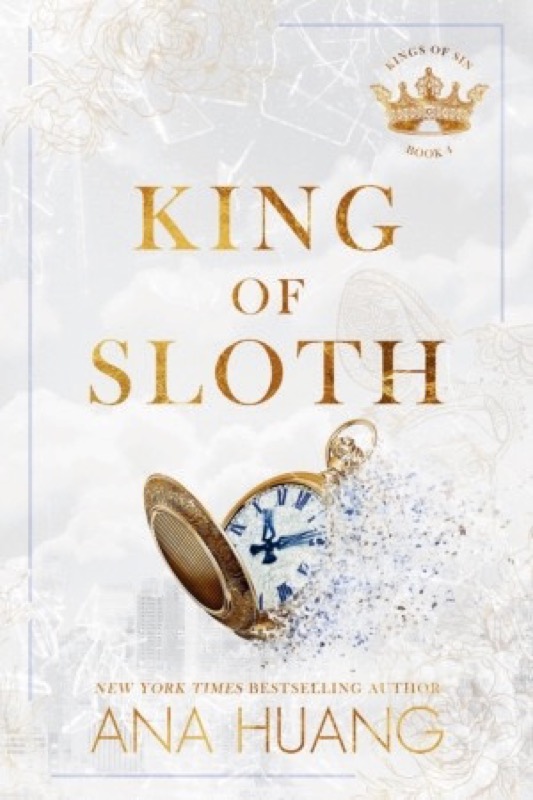
King of Sloth
Kings of Sin — Book 4
Hook & thesis
In King of Sloth, Ana Huang weaves a tale steeped in the haunting allure of emotional detachment, where the interplay between wealth and desire crafts a narrative that is as intoxicating as it is unsettling. Verdict: This novel deftly explores the abyss of emotional distance, ultimately revealing that the pursuit of connection often leads to more profound isolation.
The contextual pivot
Positioned within the dark-billionaire subgenre, King of Sloth is the fourth installment in Huang’s Kings of Sin series, which is characterized by its brooding protagonists who navigate the treacherous waters of power dynamics and wealth disparity. Huang’s work often flirts with the opulent yet morally ambiguous world of affluent antiheroes, drawing comparisons to authors like Sylvia Day and J. Lynn, who similarly delve into the complexities of desire and emotional entanglement. While the niche audience of dark romance may initially seem limited, Huang’s ability to bridge these tropes with universal themes of love and loss makes her work accessible to a broader readership.
Deep-dive critique
The structure of King of Sloth is intricately designed, employing a slow-burn intensity that mirrors the emotional distance between the characters. Huang’s choice of a dual perspective enhances the tension, allowing readers to oscillate between the protagonists’ inner turmoils. The pacing, deliberate and methodical, reflects the characters’ gradual unveiling of their vulnerabilities, cultivating a sense of anticipation that grips the reader. Yet, at times, this pacing can feel drawn out, risking reader engagement amidst the profound emotional exploration.
Huang’s prose is lush and evocative, particularly in her descriptions of settings that encapsulate the characters’ emotional states. The dialogue, often sharp and laden with subtext, reveals the characters’ intricate dance of power and submission, creating an atmosphere thick with unspoken desires. However, there are moments when the dialogue lapses into clichés, undermining the otherwise compelling character development. The world-building, rich with details of inequality and wealth, serves as a poignant backdrop that amplifies the central conflict of emotional connection versus isolation.
The ending, while character-driven and satisfying in its resolution, raises questions about the long-term implications of the characters’ choices. Is the reconciliation truly earned, or merely a product of the circumstances they find themselves in? Huang leaves readers to ponder the weight of their decisions, a hallmark of effective storytelling.
Discussion launchpad
The interplay of wealth and emotional distance in King of Sloth invites considerable debate, especially regarding the moral implications of its characters’ actions and desires.
Questions for the room:
- How does Huang’s portrayal of emotional distance challenge traditional romantic tropes?
- In what ways does the wealth disparity enhance or detract from the characters’ emotional journeys?
- Are the protagonists relatable, or do their privileged circumstances alienate the reader?
- How does the slow-burn structure impact your engagement with the story?
- What do you think about the ending — does it provide genuine closure or leave lingering questions?
#TheOrchidRoom #darkbillionaire #darkromance #kings of sin #literaryanalysis