
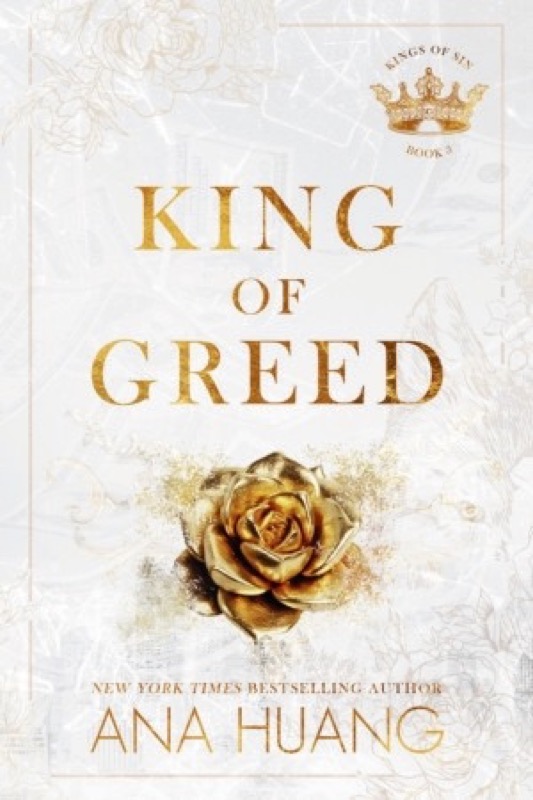
King of Greed
Kings of Sin — Book 3
Hook & thesis
In Ana Huang’s King of Greed, the narrative unfurls as a nuanced exploration of desire entangled with power and emotional neglect. Verdict: This book navigates the tumultuous waters of wealth and greed, offering a visceral commentary on relationships warped by affluence and ambition.
The contextual pivot
As the third installment in the Kings of Sin series, King of Greed delves into the dark-billionaire subgenre with a confident grip on its thematic undercurrents. Huang deftly captures the essence of wealth disparity and power dynamics, drawing comparisons to works by authors like Penelope Douglas and Sylvia Day, who also explore the intersections of desire and dominance. While the book resonates with niche audiences drawn to the allure of affluent antiheroes, it possesses the potential to bridge these tropes to a broader readership by presenting relatable emotional struggles beneath the opulent surface.
Deep-dive critique
Huang’s structural choices, particularly her use of a dual perspective, effectively heighten the tension between the protagonists, allowing the reader to experience the push and pull of their desires. The alternating POVs reveal how the characters’ internal conflicts mirror the book’s central theme of greed, creating a compelling dynamic that keeps the stakes high. The pacing is adeptly managed, building anticipation until the climactic moments, though moments of slower exposition occasionally dilute the urgency.
In terms of prose, Huang’s writing is lush and evocative, embedding the reader in a world that is both glamorous and suffocating. Yet, at times, the dialogue feels stilted, lacking the natural flow that enhances character depth. The characters themselves are complex, but their arcs can feel predictable, as if adhering too closely to genre conventions without sufficiently subverting them. Emotional neglect, a recurring theme, is explored with sensitivity, although it occasionally risks becoming overshadowed by the more sensational aspects of the plot.
The ending, while satisfying, leaves some threads unresolved, prompting reflection on the true cost of ambition and love. Huang poses challenging questions about what it means to desire, possess, and ultimately, to lose.
Discussion launchpad
King of Greed invites rich debate on the darker aspects of love and ambition, particularly how wealth can distort relationships.
Questions for the room:
- How do power dynamics influence the characters’ motivations, and can relationships thrive under such conditions?
- Does the portrayal of emotional neglect resonate authentically, or does it come off as a trope?
- In what ways does the narrative critique the allure of wealth, and is it effective?
- How do the dual perspectives enhance or detract from the overall experience of the story?
- Is the resolution earned, or does it leave too many questions unanswered?
#TheOrchidRoom #darkbillionaire #darkromance #kings of sin #marriage in trouble