
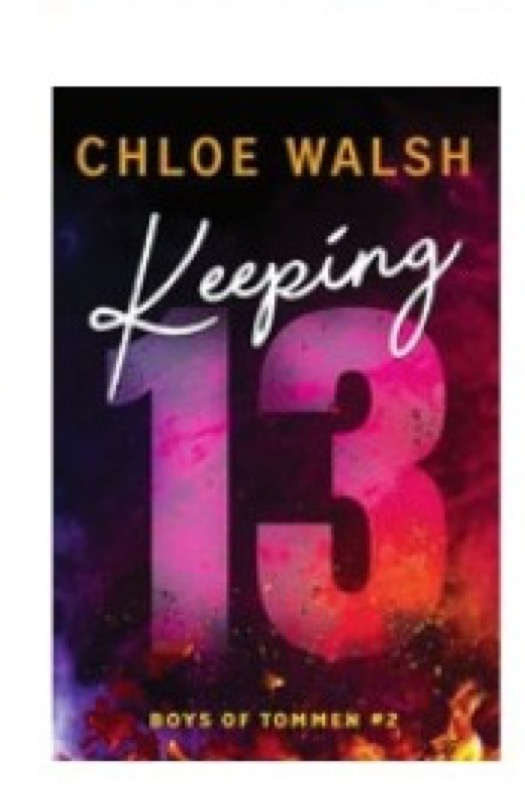
Keeping 13
Boys of Tommen #2
Hook & thesis
“Keeping 13” by Chloe Walsh is a haunting exploration of desire entwined with the darker aspects of human connection, presenting a narrative that challenges the boundaries of love and obsession. Verdict: This novel deftly navigates the treacherous waters of toxic love, leaving the reader breathless and questioning the fine line between passion and possession.
The contextual pivot
Nestled within the bully-romance genre, Walsh’s work operates at the intersection of youthful angst and emotional turmoil. In the broader landscape of contemporary fiction, it aligns with authors like Penelope Douglas and Tijan, who delve into similarly fraught relationships marked by power dynamics and vulnerability. Walsh’s exploration of the darker archetypes of romance — the possessive lover, the tormented soul — not only appeals to enthusiasts of the niche but also invites general readers into the complexity of human emotions, suggesting that love often wears a sinister mask.
Deep-dive critique
Structurally, Walsh employs a dual perspective that oscillates between the protagonists, effectively crafting a tense pacing that builds both intrigue and emotional depth. This choice allows readers to grasp the conflicting motives that drive the characters, yet it occasionally risks diluting the intensity of pivotal moments. The dialogue pulses with a rawness that mirrors teenage angst, infused with a realism that can be both alluring and uncomfortable. For instance, the moments of confrontation, rife with sharp wit and underlying violence, serve as a potent reminder of the characters’ inner turmoil.
The thematic success of the novel lies in its unflinching portrayal of obsession and the consequences of unfinished emotional business. Walsh’s world-building, though centered around the familiar setting of a high school, is peppered with details that evoke a sense of foreboding, setting the stage for the characters’ inevitable clashes. However, some readers may find the portrayal of certain themes — particularly violence and possession — to be problematic, raising questions about glorification and the moral implications of such relationships. The ending, while impactful, can feel abrupt, leaving a lingering sense of dissatisfaction — a reflection of the unresolved nature of the characters’ journeys.
Discussion launchpad
The novel’s polarizing elements hinge on its moral ambiguity and portrayal of toxic relationships, igniting rich conversations about the nature of love and the boundaries one should draw.
Questions for the room:
- Does the depiction of toxic relationships enhance or detract from the romantic elements in the story?
- How does the dual perspective shape your understanding of the characters’ motivations?
- In what ways does the setting contribute to the overarching themes of obsession and possession?
- Can we separate the allure of dark romance from its more troubling implications?
- What responsibility do authors have in portraying relationships that blur ethical lines?
#TheOrchidRoom #bullyromance #darkromance #BoysOfTommen #literaryanalysis