
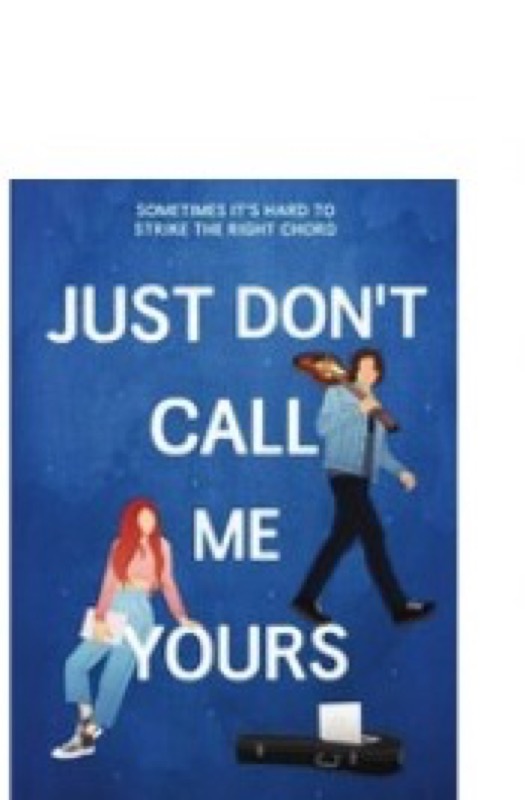
Just Don't Call Me Yours
Sometimes it's hard to strike the right chord
Hook & thesis
In Heather Garvin’s Just Don’t Call Me Yours, we navigate a turbulent duet of enemies turned lovers, exploring the raw dissonance of desire and identity entangled in a world of music. Verdict: Garvin deftly captures the tumultuous dance of power and vulnerability, making this novel a striking reflection on the complexities of human connection.
The contextual pivot
Positioned within the enemies-to-lovers trope, Garvin’s work resonates with echoes of contemporary dark romance, reminiscent of authors like Talia Hibbert and Mariana Enriquez. The narrative transcends the confines of its genre by leveraging musical metaphors to elevate the emotional stakes, bridging the niche of dark romance with accessible themes for general readers. The invisible audience here is one that craves depth in romantic conflict, where emotional resonance is as vital as physical connection.
Deep-dive critique
Garvin’s structural choices—pacing, dual POV, and nonlinear timeline—serve as an instrument that highlights the tumult of the protagonists’ relationship. The brisk pacing mirrors the unpredictable rhythm of their interactions, while the dual POV allows readers to inhabit both characters’ emotional landscapes, granting insight that enriches the tension. The dialogues are sharp, filled with biting wit and unspoken longing, creating a palpable undercurrent of desire that propels the narrative forward.
The thematic exploration of music as a metaphor for connection and conflict is particularly effective. Garvin crafts scenes where the characters’ struggles with their own identities resonate through the melodies they play, suggesting that love is as much about harmony as it is about dissonance. However, there are moments where the character development feels uneven; the motivations of secondary characters occasionally lapse into cliché, detracting from the otherwise complex interplay of the main duo. The ending, while satisfying in its resolution, could be seen as a missed opportunity for deeper thematic exploration, leaving a lingering sense of what could have been.
Discussion launchpad
The novel’s exploration of power dynamics and personal identity raises several polarizing elements ripe for discussion. How do readers perceive the balance of power in romantic relationships, especially within the context of past grievances and emotional baggage?
Questions for the room:
- Can the enemies-to-lovers trope effectively address contemporary themes of consent and power?
- How does Garvin’s use of music as a metaphor influence your understanding of the characters’ relationships?
- In what ways do the secondary characters enhance or detract from the main narrative?
- Do you find the ending fulfilling, or does it leave too many questions unanswered?
- How does the dual POV impact your emotional engagement with the protagonists?
#TheOrchidRoom #enemiestolovers #darkromance #literaryanalysis #darkheartlabs