
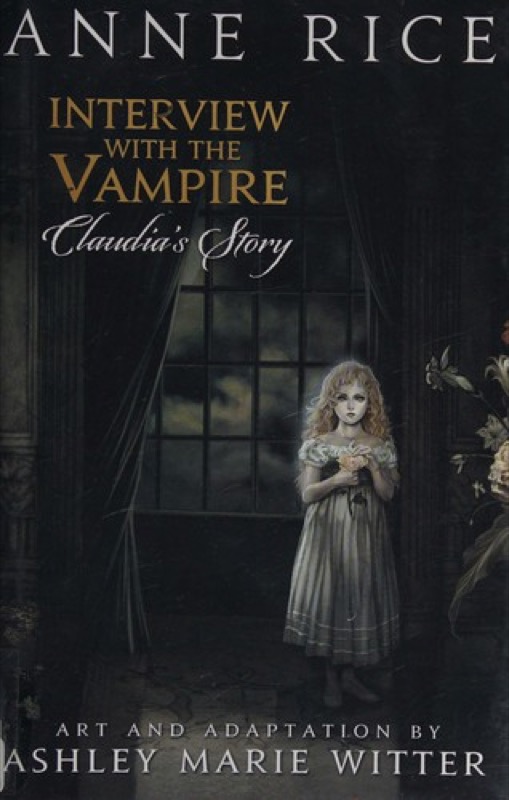
Interview with the Vampire: Claudia's Story
A graphic novel retelling of Claudia's story from Anne Rice's 'Interview with the Vampire.'
Interview with the Vampire: Claudia’s Story by Ashley Marie Witter
Hook & thesis
This graphic novel serves as a haunting retelling of Claudia’s tragic tale from Anne Rice’s seminal Interview with the Vampire, illuminating desire and the inescapable loss of innocence. Verdict: Witter’s artistry encapsulates the brutal beauty of a child’s eternal yearning in a world where love and power intertwine, creating a vivid exploration of vampiric existence that feels both familiar and unsettling.
The contextual pivot
Positioned squarely within the vampire-paranormal genre, Witter’s work navigates familiar territory while also asserting its own narrative authority. Unlike traditional vampire lore that often romanticizes the undead, this graphic novel delivers a raw and poignant viewpoint through Claudia’s eyes, bridging niche gothic tropes with universal themes of loss and longing. Witter’s retelling resonates with readers who appreciate the depth of Rice’s original work while simultaneously drawing in newcomers curious about the complexities of immortality and agency within the horror genre. The artwork—delicate yet dark—further enhances the story’s emotional landscape, appealing to both graphic novel enthusiasts and those wary of more conventional vampire narratives.
Deep-dive critique
Witter’s narrative structure cleverly mirrors Claudia’s psychological turmoil, employing a nonlinear timeline that juxtaposes past and present, enhancing the reader’s understanding of her internal conflict. The pacing, while deliberate, allows readers to linger on Claudia’s fleeting moments of joy, contrasting sharply with the cycles of violence and despair that encircle her existence. The artwork itself functions as a compelling narrative device, with expressive character designs that capture the nuances of each emotional revelation.
The use of color—a palette dominated by deep reds and somber blues—reinforces the gothic aesthetic, while the expressive linework translates complex emotions into visual language. However, one might critique that certain scenes, particularly those delineating her relationship with Lestat, felt somewhat rushed, risking an under-exploration of the psychological manipulation at play. Here, Witter excels at portraying Claudia’s fierce independence, yet may falter in providing a fuller context of her transformation from a child into a weapon of vengeance. The ending, while impactful, raises questions about whether it satisfactorily conveys Claudia’s unresolved quest for agency within a predatory world, leaving readers hungering for closure.
Discussion launchpad
Witter’s Claudia’s Story invites a multitude of conversations around the interplay of innocence, power, and the monstrous. The juxtaposition of Claudia’s eternal youth against the backdrop of a violent, adult world prompts reflections on the nature of desire and autonomy.
Questions for the room:
- How does Witter’s visual storytelling enhance or detract from Claudia’s emotional arc?
- In what ways does Claudia’s struggle for agency reflect broader themes within the vampire genre?
- Does the portrayal of violence and abuse serve the narrative, or does it risk overshadowing Claudia’s character development?
- How do you interpret the relationship dynamics between Claudia and Lestat—are they rooted in love or manipulation?
- What does Claudia’s journey say about the cost of immortality in both a literal and metaphorical sense?
#TheOrchidRoom #vampire #gothic #graphicnovel #darkromance