
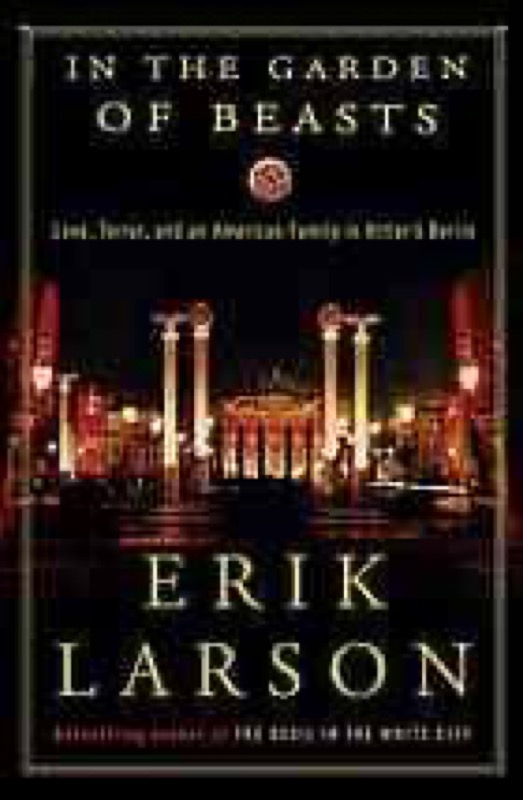
In the Garden of Beasts: Love, Terror, and an American Family in Hitler's Berlin
Hook & thesis
In Erik Larson’s gripping narrative, In the Garden of Beasts: Love, Terror, and an American Family in Hitler’s Berlin, the author meticulously constructs a portrait of an American family navigating the treacherous political landscape of Nazi Germany. Verdict: Larson’s work serves as a poignant reminder of the complexities of human relationships against the backdrop of terror, unfolding a harrowing yet crucial narrative that underscores the fragility of safety and the weight of moral choices.
The contextual pivot
Situated within the realm of dark thrillers, Larson’s account stands distinct from purely fictional tales of suspense by grounding itself in historical events. Unlike contemporaries such as Philip Kerr or Alan Furst, who often blend fiction with history, Larson opts for a documentary-style approach that breathes life into the past through meticulous research and compelling storytelling. This book appeals not only to history enthusiasts but also to general readers, bridging the gap between niche historical narratives and broader themes of love, family dynamics, and political oppression. The invisible audience seems to comprise those seeking emotional depth and historical accuracy, making Larson’s work resonate with a diverse readership.
Deep-dive critique
Larson’s structure, alternating between the personal and the political, serves to heighten the tension throughout the narrative. By employing a third-person omniscient point of view, he weaves multiple perspectives into the fabric of the story, allowing readers to grasp the complexities of his characters’ experiences in a rapidly changing world. The pacing effectively mirrors the escalating tension in Berlin, with moments of quiet reflection punctuated by harrowing episodes of violence and oppression.
Characterization shines particularly through the portrayal of William Dodd, the U.S. ambassador, and his daughter, Martha. Dodd’s internal conflicts between duty and his personal beliefs reflect the broader struggle of many individuals in the face of authoritarianism. The dialogue is sharp and revealing, especially in interactions that expose the characters’ naivety about the regime.
However, there are mechanical flaws in Larson’s reliance on historical data; at times, this can lead to a disjointed narrative flow, where the weight of facts slightly overshadows character development. The ending, while impactful, leaves some emotional threads untied, particularly concerning Martha’s choices and their repercussions on her family’s legacy, raising questions about accountability in the face of moral ambiguity.
Discussion launchpad
Larson’s blend of personal narrative with historical events invites debates around the ethical implications of personal choices during times of political unrest.
Questions for the room:
- How does Larson’s portrayal of the Dodd family challenge or reinforce our understanding of American complicity in foreign political matters?
- In what ways does the book reflect contemporary issues of political oppression and individual responsibility?
- Are there moments when the historical data detracts from character development, and how does this affect your emotional engagement with the narrative?
- What does the ending suggest about the responsibilities of those who witness injustice?
- Can we draw parallels between the Dodd family’s experiences and modern political climates, and if so, what lessons can we apply?
#LiteraryAnalysis #darkthriller #historical #politicalhistory #theorchidroom