
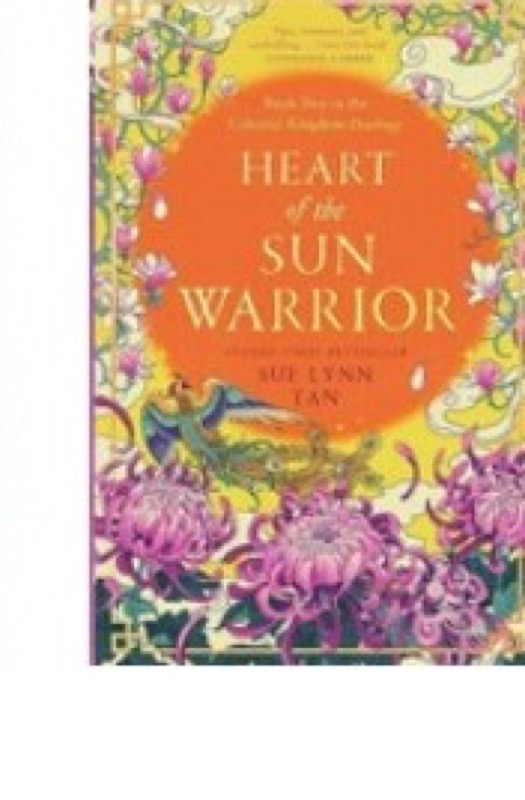
Heart of the Sun Warrior
Book Two in the Celestial Kingdom Duology
Hook & thesis
In Heart of the Sun Warrior, Sue Lynn Tan crafts a lush tapestry of fantasy and romance, propelling readers through a tempest of loyalty, betrayal, and the quest for identity. Verdict: This sequel transcends its genre tropes, illuminating the complex interplay between personal desire and the weight of destiny.
The contextual pivot
Nestled within the fantasy-romance genre and positioned as the second installment in the Celestial Kingdom Duology, Tan’s work is a testament to her ability to weave intricate narratives that explore both the human heart and the supernatural. Unlike many of her contemporaries who may lean heavily into formulaic plots, Tan boldly integrates cultural mythology with profound emotional stakes. The invisible audience here blends fans of Asian mythological narratives with those who crave heartfelt conflict, effectively bridging niche tropes to attract a broader readership.
Deep-dive critique
The structure of Heart of the Sun Warrior unfolds with a rhythm that mirrors the turbulent emotions of its characters, utilizing multiple points of view to deepen the reader’s understanding of the stakes involved. Tan’s pacing deftly balances moments of intense conflict with quieter reflections, allowing the characters’ inner turmoil to simmer beneath the surface before boiling over at critical junctures. The prose is rich and evocative, with vivid imagery that not only builds the world but also serves as a metaphor for the characters’ internal struggles.
Characterization shines, particularly in the protagonist, whose journey is marked by a struggle for self-definition amidst the chaos of war and familial expectations. Dialogue is sharp and revealing, often laden with subtext that adds layers to relationships, particularly the romantic tensions that drive the narrative forward. However, while the ending provides closure, it occasionally feels rushed, leaving a lingering question of whether all character arcs were fully realized.
Despite these flaws, Tan’s thematic exploration of betrayal and the consequences of desire is what ultimately elevates the narrative. The content warnings are not mere embellishments but integral to the character’s development, forcing them to confront the darker aspects of their world and themselves. This duality—of light and dark, hope and despair—creates a compelling tension that keeps the reader engaged throughout.
Discussion launchpad
The novel invites polarizing opinions, particularly around the pacing of the conclusion and the depth of character arcs. While some may appreciate the swift resolution as a necessary closure, others might argue it undermines the emotional weight that precedes it.
Questions for the room:
- How does Tan’s exploration of betrayal resonate with contemporary themes in romance?
- Do you believe the pacing in the second half serves the narrative, or does it detract from character development?
- In what ways do the mythological elements enhance or hinder the story’s emotional impact?
- How do you interpret the role of sacrifice in the characters’ journeys?
- What lingering questions do you have about the world-building and its implications for future stories?
#TheOrchidRoom #fantasyromance #romantasy #darkromance #celestialkingdom #darkheartlabs