
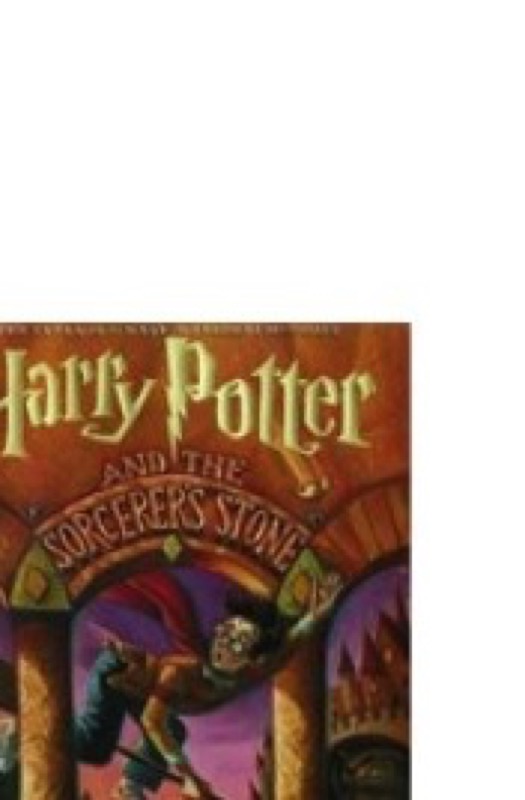
Harry Potter and the Sorcerer's Stone
A boy in a cupboard under the stairs gets a letter — and children’s publishing never recovers. The boarding-school story, rebuilt with magic.
Hook & thesis
The Sorcerer’s Stone is a machine for delivering wonder on schedule: a platform hidden in a station wall, a shopping street behind a pub, a school that sorts you like a personality quiz. Rowling’s genius in book one is the pacing of revelation — every chapter hands Harry one more door, and the reader, who knows exactly as much as he does, walks through at his side. Under the wonder runs the series’ real architecture: Harry is famous for surviving something he can’t remember, and the book keeps asking what it costs a child to be a symbol before he’s allowed to be a person. Verdict: The slightest of the seven as a novel, and the most consequential as an event; its cost is a plot held together by a headmaster’s eccentric decisions, which the series would later have to explain as design.
The contextual pivot
Harry Potter and the Philosopher’s Stone was published by Bloomsbury in June 1997 in an edition of five hundred hardcovers, most destined for libraries — after a dozen publishers had declined it. Rowling wrote it in Edinburgh cafés, having planned the whole series across the seven years between the idea and publication; the print run is now a legend of underestimation, because within three years the books had done something children’s publishing wasn’t built for — crossed over, adults buying their own copies in adult-jacket editions, a generation reading in real time, one book a year, aging with Harry. Scholastic renamed it Sorcerer’s Stone for America, fearing ‘philosopher’ would read as homework — an early sign of the franchise logic that would surround the books without ever quite swallowing them. Its ancestors are the British boarding-school story, Blyton, Dahl, and the Narnia wardrobe. Its descendants are the whole modern middle-grade and YA industry, which has been trying to repeat its weather ever since.
Deep-dive critique
The narration is third-person limited, glued to Harry — with one famous exception: the opening chapter, which belongs to Mr. Dursley and the wizarding world’s celebration, a prologue that gives the reader one secret Harry doesn’t have — his own fame — and then never repeats the trick. Rowling’s prose is plain, funny, and adverbially unrestrained, and its real distinction is engineering: the school-year structure turns the novel into a calendar of anticipated pleasures (sorting, first snow, Quidditch, exams), so the forward motion is carried by ritual as much as by mystery. The mystery itself is honestly clued, and the Stone’s gauntlet is a set of set-pieces keyed to each friend’s talent — structural generosity disguised as adventure. The flaws are the ones the series spent six books retrofitting: Dumbledore’s decisions (the Stone kept in a school, the house points, the cloak’s errand) work as whimsy here and later required explanation as strategy; Snape’s misdirection depends on Harry’s misreading, which the limited narration enforces a little too conveniently; and the Dursleys are Dahl-grade caricatures, cruelty in primary colors. None of it dents the book’s central transaction — wonder delivered on schedule, through a door the reader opens at the hero’s shoulder, at exactly his speed of learning.
Discussion launchpad
Harry’s fame precedes him into every room. The book is about a child negotiating a story other people wrote about him — which is also, not coincidentally, what happened to the book itself.
Questions for the room:
- What does this novel understand about child fame that its own phenomenon then re-enacted?
- Dumbledore warns that men have wasted away before the Mirror of Erised — then lies about what he sees in it. Why the lie, and what does Harry’s vision tell us about who he is?
- Hogwarts sorts eleven-year-olds into houses that function as destinies, and the book treats it as festive. Should it?
- Three first-years defeat nearly every protection on the Stone. Plot hole — or the book’s quiet argument that adult systems are theater?
- A generation read these at their hero’s age, one a year. What did growing up in real time with Harry do that binge-reading can’t replicate?
#BookReport #Grade7 #FantasyReader #HarryPotter #LiteraryAnalysis