
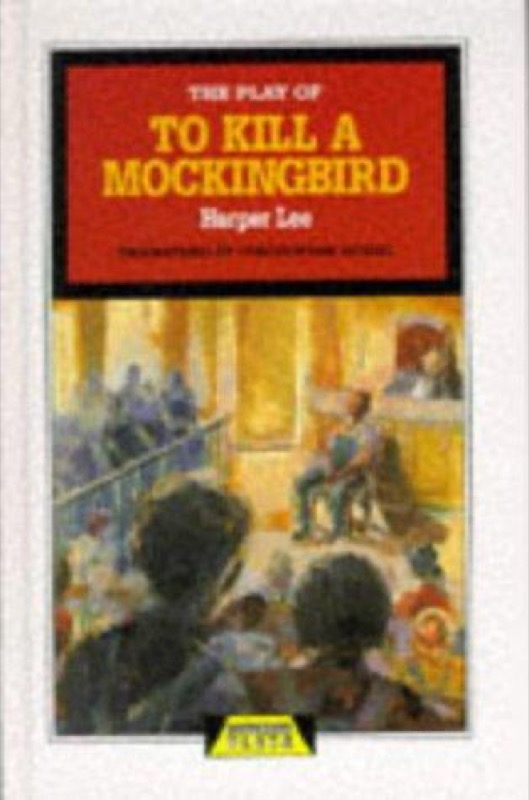
Harper Lee's To Kill a Mockingbird
Hook & thesis
To Kill a Mockingbird, adapted for the stage by Christopher Sergel, serves as a chilling exploration of moral complexity amidst a landscape rife with prejudice and injustice. Verdict: While saturated with themes of righteousness, its stark portrayal of human darkness reveals that true courage often hides in the shadows of societal decay.
The contextual pivot
Set against the backdrop of the American South, this adaptation of Harper Lee’s seminal work manifests in a dark-thriller lens, reframing its moral quandaries through a gothic edge. Sergel’s adaptation sits uniquely in the canon of social justice narrative, inviting a critical examination of racism and systemic violence that resonates with modern audiences. The invisible audience encompasses those hunting for depth in classic literature while also appealing to contemporary readers who favor darker themes intertwined with societal critique, making it a bridge between niche and mainstream literary spheres.
Deep-dive critique
Sergel’s adaptation runs a tight ship in terms of pacing, maintaining a taut narrative that underscores the urgency of its themes. The choice to distill the source material into a dramatic structure amplifies the emotional stakes, particularly through the lens of Scout, who navigates a world steeped in prejudice. However, the structure can occasionally feel rushed, as key character arcs, like that of Boo Radley, risk being overshadowed by the more overt conflicts of racism and injustice.
The dialogue crackles with authenticity, echoing the vernacular of the era and grounding the characters in their time, yet it also flirts with melodrama at points, where the weight of the themes occasionally overwhelms subtlety. The thematic exploration of death, violence, and moral ambiguity serves as a dark undercurrent, with the climax not just a resolution but a stark reminder of the pervasive societal failures. The ending, while tragic and impactful, raises questions about the possibility of redemption in a flawed world — a haunting echo that lingers long after the curtain falls.
Discussion launchpad
Sergel’s adaptation is likely to provoke intense debate over its fidelity to Lee’s original vision and how effectively it navigates the complexities of its dark themes.
- Questions for the room:
- Does the adaptation enhance or detract from the original message of To Kill a Mockingbird?
- How effectively does the play address the balance of hope and despair in the face of systemic injustice?
- To what extent does the portrayal of Boo Radley contribute to or detract from the gothic atmosphere?
- In what ways does the adaptation challenge the audience’s perceptions of morality and justice?
#LiteraryAnalysis #GothicEdge
#darkthriller #classic #socialjustice #theorchidroom