
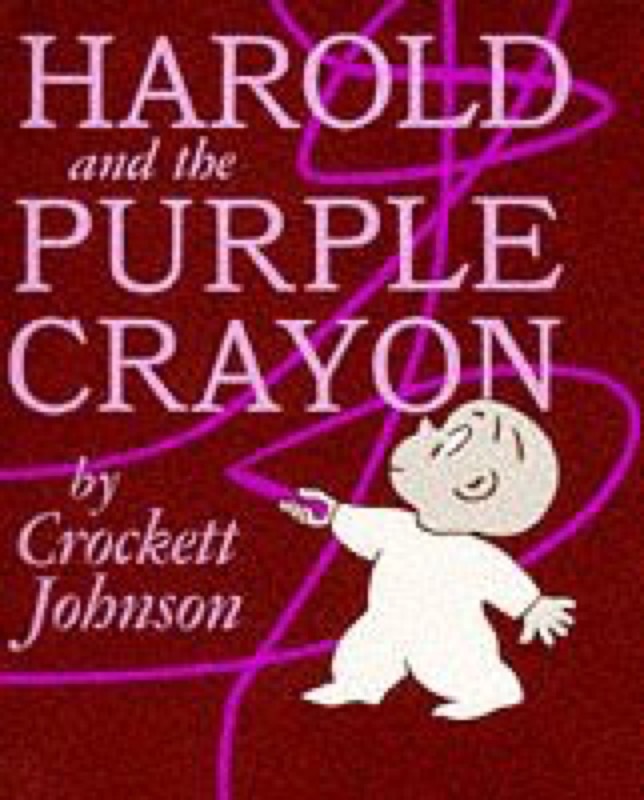
Harold and the Purple Crayon (Harold, #1)
Harold's imaginative adventures with his purple crayon.
Hook & thesis
Crockett Johnson’s Harold and the Purple Crayon is a beguiling exploration of imagination’s power, where the simplest of tools—a crayon—unleashes a tempest of creation and desire. Verdict: This book deftly interrogates the boundaries between creation and chaos, making it a timeless piece that invites readers to consider the weight of their own imagination.
The contextual pivot
Positioned at the intersection of children’s literature and surrealist storytelling, Harold and the Purple Crayon stands apart within its genre by embracing a child-like perspective that delves into deeper psychological realms. Unlike traditional narratives that impose structure, Johnson’s work invites a sense of fluidity and freedom reminiscent of the early works of Maurice Sendak and the whimsicality of Edward Gorey. The invisible audience consists of both children and adults who recall the fervor of their youthful creativity and grapple with the adult world’s constraints. In bridging the gap between niche imaginative tropes and broader existential questions, Johnson’s work transcends simple entertainment, prompting reflections on autonomy and the nature of reality itself.
Deep-dive critique
At the heart of Johnson’s narrative is the innovative use of structure: the pacing is dictated by Harold’s whimsical journey, creating a sense of urgency and discovery that reflects the very essence of childhood exploration. The point of view is singularly focused on Harold, immersing readers in his imaginative landscape, where each stroke of the crayon reveals a new challenge or delight. This tight POV invites a sense of intimacy that amplifies the emotional stakes of his creations, highlighting the inherent tension between creation and destruction as Harold navigates his whims with an almost reckless abandon.
Craft-wise, Johnson excels in his sparse yet evocative prose; the simplicity of language serves to heighten the imaginative possibilities rather than constrain them. The dialogue, often non-existent, allows the visuals to speak volumes—each illustration is a testament to Harold’s emotional state, rendering the internal conflict of a child yearning for control over his creations palpable. However, the book does falter slightly in its resolution; while the ending celebrates the triumph of imagination, it leaves some questions regarding the consequences of Harold’s unchecked creativity—an ambiguity that might disturb some readers, yet is fitting for the gothic undertones that lurk beneath the surface of this seemingly innocent tale.
Discussion launchpad
The blend of whimsy with darker undertones presents intriguing polarities for exploration. On one hand, there’s a celebration of imagination’s freedom, while on the other, a cautionary tale about the chaos it can unleash.
Questions for the room:
- How does the interplay of innocence and chaos shape your reading of Harold’s journey?
- In what ways does Johnson’s work challenge or reinforce your understanding of creativity?
- Do you find the ending satisfying, or does it leave you with more questions about the nature of Harold’s creations?
- How does this book resonate with your own experiences of childhood imagination?
- Is there a danger in glorifying the unrestrained imagination depicted in the narrative?
#TheOrchidRoom #gothic #horrorromance #children’sliterature #imagination