
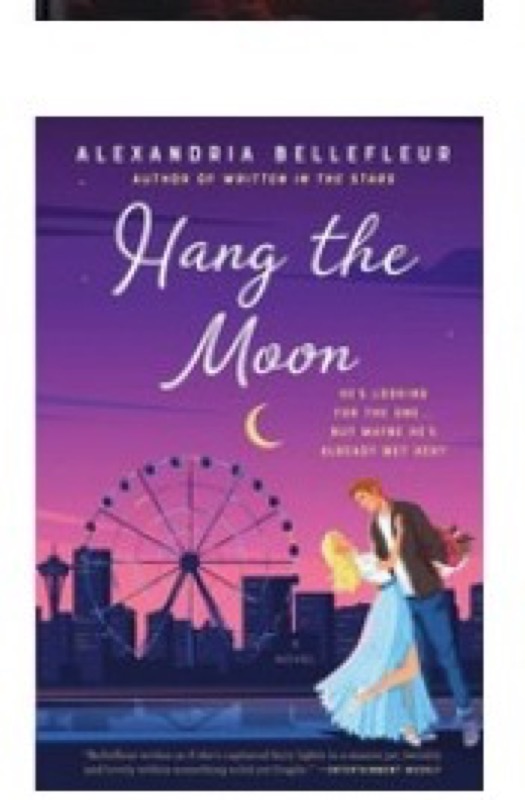
Hang the Moon
He's looking for the one... but maybe he's already met her?
Hook & thesis
In Alexandria Bellefleur’s Hang the Moon, the author deftly navigates the treacherous waters of romantic entanglement, exposing the raw edges of love and desire that thrive in the shadows of enmity. Verdict: This novel expertly weaves tension and vulnerability, making the journey from rivals to lovers not just a trope, but a profound exploration of the human condition.
The contextual pivot
Hang the Moon stands firmly within the enemies-to-lovers subgenre, yet it transcends its thematic confines by integrating a rich tapestry of character complexities and emotional depths. Bellefleur’s work resonates with echoes of other contemporary authors like Emily Henry and Christina Lauren, yet she carves her niche by delving into queer identities and the nuanced dynamics of bisexuality in a setting as vibrant and moody as Seattle. The invisible audience here is likely comprised of readers who crave both romantic tension and character-driven narratives, seeking not just a love story but an exploration of identities colliding amidst tempestuous circumstances.
Deep-dive critique
Bellefleur’s structural choices—alternate perspectives and tightly focused timelines—serve to amplify the stakes of the protagonists’ conflict, immersing readers in their shared animosities and burgeoning affections. The dual POV allows the narrative to breathe, revealing the vulnerabilities of both characters in a manner that feels authentic and relatable. The pacing is masterfully orchestrated, with moments of intense emotional conflict juxtaposed against quieter, introspective scenes that allow for character development.
In terms of craft, Bellefleur excels at dialogue that crackles with tension, underscoring the push and pull of attraction masked by hostility. Her prose flows with a lyrical quality that evokes the lush and sometimes gothic undertones of the Seattle setting, enhancing the novel’s atmospheric depth. However, some may find the resolution a touch predictable, as the emotional arcs seem to align comfortably with genre expectations. Yet, this predictability does not detract from its impact; rather, it reinforces the notion that even amidst conflict, love can flourish in the most unexpected ways.
Discussion launchpad
The novel presents compelling polarities for debate, particularly around the traditional conventions of the enemies-to-lovers trope versus the modern deconstructions of romance.
Questions for the room:
- How effectively do the dual perspectives illuminate or hinder the central conflict?
- Does the predictability of the ending add to or detract from the overall experience of the story?
- In what ways does the setting act as a character in its own right, influencing the romantic dynamics?
- How does Bellefleur’s portrayal of bisexuality challenge or conform to genre norms?
- What are the implications of unresolved tensions between characters, and how do they reflect broader societal themes?
#TheOrchidRoom #enemiestolovers #darkromance #Seattle #literaryanalysis