
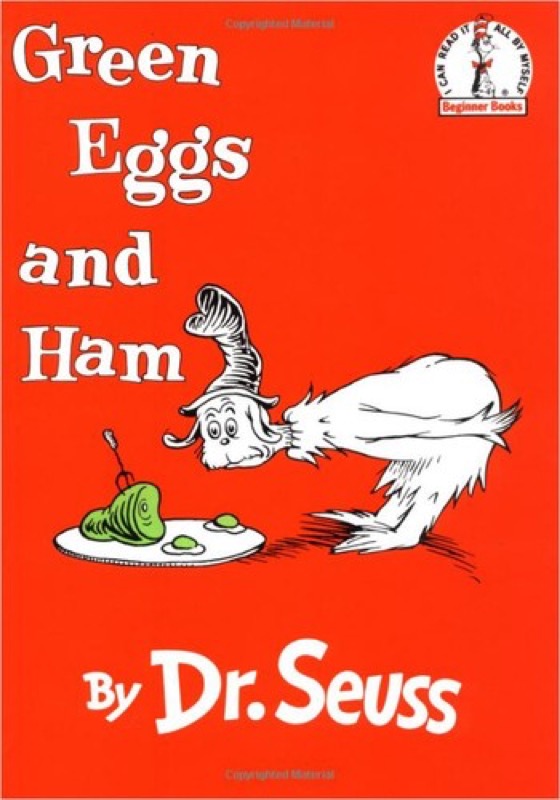
Green Eggs and Ham
Hook & thesis
Dr. Seuss’s “Green Eggs and Ham” artfully disguises a profound exploration of resistance to change beneath its whimsical surface. Verdict: This deceptively simple tale catalogues the fierce human struggle against the unknown, presenting both a challenge to and a celebration of our innate desires for comfort and familiarity.
The contextual pivot
While often categorized within children’s literature, Seuss’s work transcends conventional genre boundaries, inviting analysis through a gothic-horror-romance lens. The tension between the protagonist’s comfort zone and the eerie allure of the unknown echoes themes present in gothic literature, where fear and desire are intertwined. In the landscape of Seuss’s oeuvre, this text stands out as a playful yet poignant commentary that bridges niche tropes—such as the horrors of the unfamiliar—into a format accessible to general audiences, young and old alike.
Deep-dive critique
At first glance, “Green Eggs and Ham” appears to be a simple rhyming narrative, but its structure serves as a masterclass in pacing and tension. The repetitive insistence of the main character’s aversion to green eggs and ham escalates into a crescendo as he encounters the dish in increasingly surreal scenarios. This technique not only builds anticipation but also mirrors a psychological confrontation with the self. Seuss’s playful and rhythmic prose, punctuated by internal rhymes and a vivid imagination, creates a world that feels both inviting and slightly unsettling, which is a hallmark of gothic literature.
Moreover, the dialogue-driven narrative allows readers to experience the protagonist’s internal conflict in real-time, effectively engaging them in the emotional stakes of his fears. The world-building, though minimal, leverages bold illustrations to enhance the sense of unease associated with the unfamiliar. The resolution—acceptance of the green eggs and ham—feels earned, as it encapsulates the broader theme of embracing the unknown, thus transforming what could have been a mere children’s rhyme into a deeply resonant exploration of desire and aversion.
Discussion launchpad
The interplay of fear and desire in Seuss’s work leads to intriguing conversations around the nature of choice and acceptance. How does a story so seemingly simple unveil the complexities of human emotion?
Questions for the room:
- What does the protagonist’s journey say about cultural resistance to change?
- How does Seuss’s playful style impact the weight of the narrative’s themes?
- In what ways can this book serve as a mirror to adult struggles with the unfamiliar?
- Could the whimsical portrayal of green eggs and ham be interpreted as a critique of societal norms?
- How does the book’s structure influence its emotional impact on both children and adults?
#TheOrchidRoom #gothic #horrorromance #children’sliterature #literaryanalysis