
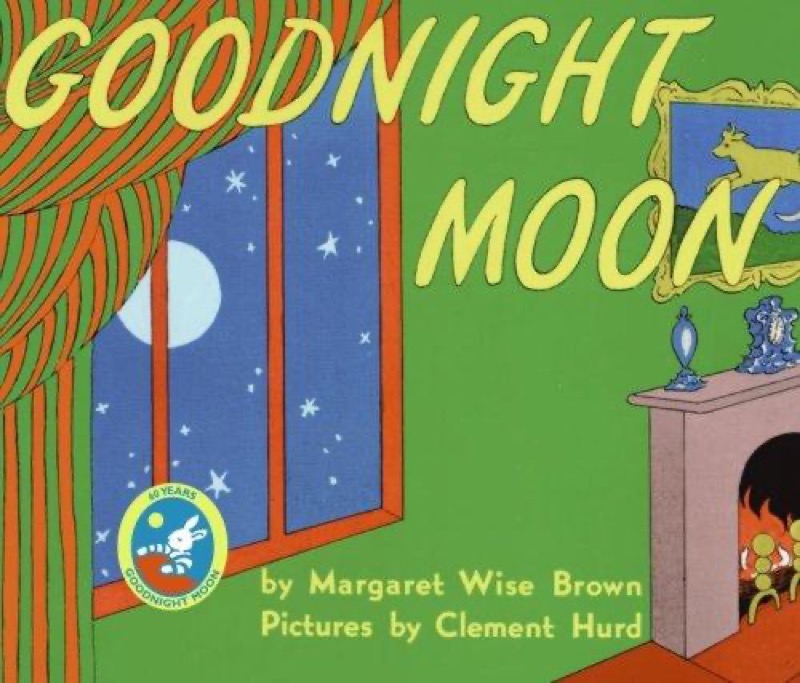
Goodnight Moon
Hook & thesis
Margaret Wise Brown’s “Goodnight Moon” subverts the conventional bedtime story with its haunting, lyrical simplicity, revealing the innate fear of darkness and the yearning for comfort. Verdict: This is a masterclass in how minimalism can evoke profound emotional resonance, lingering long after the last page.
The contextual pivot
Nestled within the realm of children’s literature, “Goodnight Moon” transcends its genre, positioning itself as a subtle exploration of gothic themes. While ostensibly a bedtime story, it deftly navigates the shadows of childhood anxiety and the unspoken fears that accompany the night. Brown’s distinctive voice and thematic richness align her with the likes of Edward Gorey and Maurice Sendak, who similarly blend innocence with an undercurrent of eeriness. The invisible audience here straddles both children and adults, as the book’s layered nuances invite reflection on the nature of fear and comfort, bridging niche tropes of gothic horror with universal experiences.
Deep-dive critique
The structure of “Goodnight Moon” is deceptively simple; its rhythmic pacing mirrors the act of settling down, lulling readers into a trance-like state. The repetition of the phrase ‘goodnight’ serves not merely as a comforting refrain but as an incantatory gesture that underscores the tension between safety and the encroaching darkness. Through the perspective of a small bunny, Brown crafts an intimate world where every element—the green light, the red balloon—becomes a character in itself, imbued with significance. This world-building, though minimalist, is rich in emotional texture, inviting readers to confront their own fears of the unknown.
Brown’s use of language is equally compelling; her choice of vocabulary is simple yet evocative, creating a space where both children and adults can find solace. The dialogue, if one could call it that, is stripped down to essential phrases, allowing the ambient sound of the words to echo with a haunting beauty. However, this minimalism may also be viewed as a flaw; some might argue that it risks diluting the emotional stakes. Yet, I contend that the book’s strength lies in its ability to evoke unease through what remains unspoken—the shadows that dance just beyond the coziness of the room.
The ending, while seemingly benign, resonates with a haunting finality, leaving readers to ponder the cyclical nature of comfort and fear. The juxtaposition of the mundane with the gothic—think of the way the moonlight casts eerie shadows—provides a rich soil for thematic exploration, making it an earned conclusion that lingers in the mind.
Discussion launchpad
“Goodnight Moon” plays with polarities that can ignite diverse interpretations among readers. Its ability to evoke both comfort and unease invites debate about the nature of childhood fears and how they are communicated through literature.
Questions for the room:
- Is the minimalism of the text a strength or a limitation in its exploration of fear?
- How do you interpret the role of the unseen in the narrative?
- What does the book say about the nature of comfort in the face of the unknown?
- In what ways does this book challenge or reinforce traditional notions of bedtime stories?
- How does the interplay between light and dark enhance the gothic elements of the narrative?
#TheOrchidRoom #gothic #horrorromance #childrensliterature #darkheartlabs