
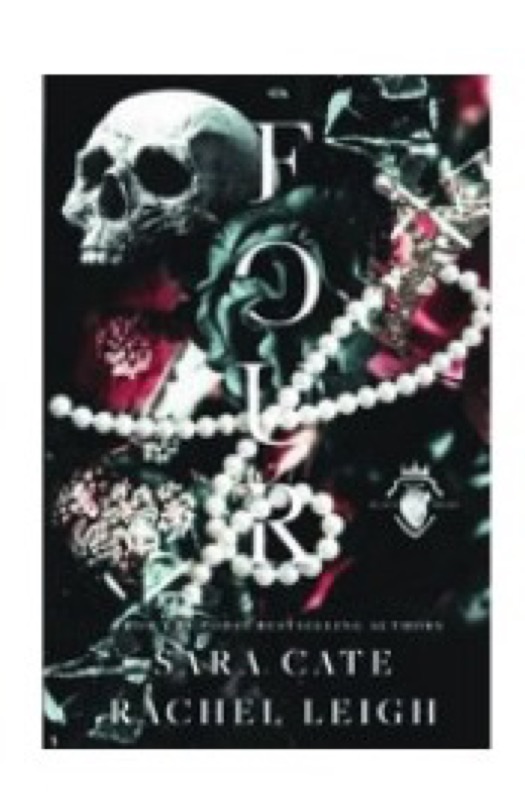
Four
USA Today Bestselling Authors
Hook & thesis
In the realm of reverse-harem narratives, Four by Sara Cate and Rachel Leigh serves not merely as a tale of romantic entanglements but as a provocative exploration of identity and desire within the constraints of dark themes. Verdict: This book challenges conventional romance tropes, daring readers to embrace the chaotic interplay of love and power.
The contextual pivot
Four positions itself within the reverse-harem subgenre, where multiple love interests converge around a central protagonist. However, unlike many of its contemporaries that lean heavily on escapism, this novel delves into darker undercurrents, offering a nuanced portrait of characters grappling with their pasts and desires. In the authors’ oeuvre, this piece stands out as a bold experiment, bridging the gap between niche fantasy and broader emotional truths that resonate with mainstream audiences. It invites readers who may not typically indulge in reverse-harem tropes, revealing the genre’s potential for complexity and depth.
Deep-dive critique
The structure of Four is pivotal in its execution, employing a dual narrative that oscillates between various perspectives, which serves to heighten the tension and emotional stakes. This choice not only amplifies the reader’s connection to the characters but also reflects the chaotic nature of their intertwined fates. The pacing, at times deliberately languid, allows moments of introspection that contrast sharply with the more heated interactions, crafting a rhythm that mirrors the duality of desire and danger.
The authors excel in character development, particularly in how they construct the dynamics between the protagonist and her suitors. Each character is imbued with distinctive traits and backstories that render their motivations palpable, even as they navigate the murky waters of their relationships. Dialogue crackles with a mix of vulnerability and bravado, revealing the characters’ inner conflicts while reinforcing their desires.
However, this intricate web of relationships is not without its pitfalls. At times, the thematic ambition risks being overshadowed by the sheer volume of sexual content, which, while integral to the narrative, can feel overwhelming. The ending, a culmination of fraught tensions, is mostly earned, yet it leaves room for contemplation about the nature of love and possession.
Discussion launchpad
The novel raises profound questions about the interplay of power and affection within romantic entanglements, generating potential friction among readers.
Questions for the room:
- Does the portrayal of multiple love interests enrich or dilute the character arcs?
- How do the dark themes contribute to or detract from the romantic elements of the story?
- In what ways does the dual narrative enhance our understanding of the protagonist’s psyche?
- Is the exploration of desire and identity ultimately empowering or problematic?
- How does the ending reshape your feelings about the characters’ journeys?
#TheOrchidRoom #reverseharem #darkromance #literaryanalysis #darkheartlabs