
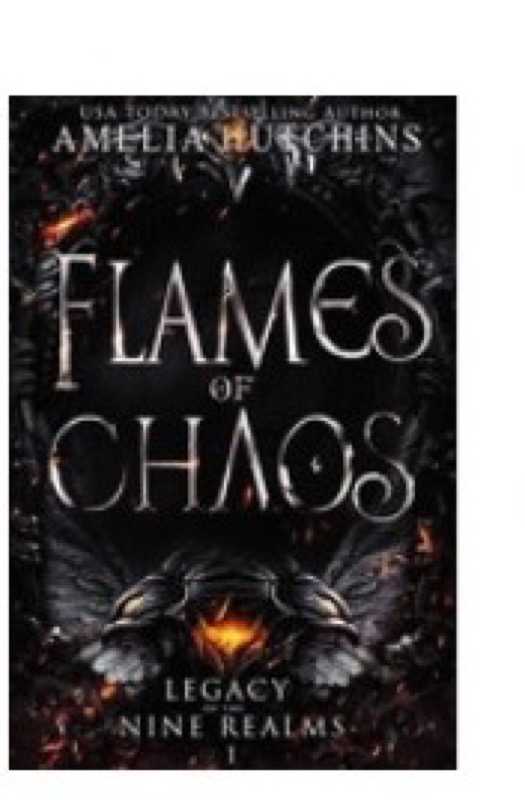
Flames of Chaos
Legacy of the Nine Realms 1
Hook & thesis
In “Flames of Chaos,” Amelia Hutchins crafts a tale that ignites the senses and ensnares the heart with its fiery blend of fantasy and romance. The book’s true engine lies in the exploration of obsession and its destructive nature, as characters grapple with their desires amidst a backdrop of war and dark magic. Verdict: Hutchins has woven a compelling narrative that resonates with both the fervor of romance and the chaos of conflict, making it a standout in its genre.
The contextual pivot
Positioned within the fantasy-romance domain, “Flames of Chaos” sits comfortably alongside the likes of Sarah J. Maas and Jennifer L. Armentrout, yet Hutchins distinctly carves her niche through an unabashed embrace of darkness. The author’s work often treads the fine line between passion and peril, inviting readers who revel in the tension of love intertwined with danger. The book’s intensity appeals to a dedicated audience familiar with niche tropes of dark romantasy, while simultaneously inviting newcomers to a world rich in emotional depth and moral ambiguity.
Deep-dive critique
The novel’s structure serves as a double-edged sword; while the pacing accelerates the reader’s heartbeat, it sometimes skims over necessary character development. The dual perspectives offer insight into the tumultuous emotions of the protagonists, effectively illustrating their internal conflicts. However, there are moments where the shifting point of view risks disorientation rather than enhancing depth. Hutchins excels in world-building, painting vivid imagery that immerses the reader in a realm teeming with chaos and dark magic. The prose is imbued with a lyrical quality that elevates the emotional stakes, though it occasionally meanders into melodrama, which might alienate some readers.
Characterization shines through the protagonist’s obsession, a portrayal that oscillates between captivating and unsettling. This duality propels the narrative, creating an atmosphere that is both intoxicating and fraught with tension. Dialogue often crackles with underlying desire, though at times it veers towards the cliché. The ending, while satisfying in its resolution, leaves lingering questions about the implications of the characters’ choices in a world that demands sacrifice. Ultimately, the thematic exploration of love as both a sanctuary and a prison enhances the narrative’s richness, though it could benefit from sharper focus in certain areas.
Discussion launchpad
The juxtaposition of love and chaos offers fertile ground for debate, as readers may find themselves divided on the portrayal of obsession versus genuine connection. What does it mean for love to exist in a world rife with violence and dark magic?
Questions for the room:
- How do the characters’ obsessions reflect broader themes of power and control in the narrative?
- In what ways does Hutchins challenge or reinforce traditional fantasy-romance tropes?
- How does the dual perspective enhance or detract from the emotional impact of the story?
- What are the ethical implications of the characters’ decisions under the influence of dark magic?
- How does the portrayal of war shape the romantic elements of the story?
#TheOrchidRoom #fantasyromance #darkromance #legacyofnineRealms #literaryanalysis