
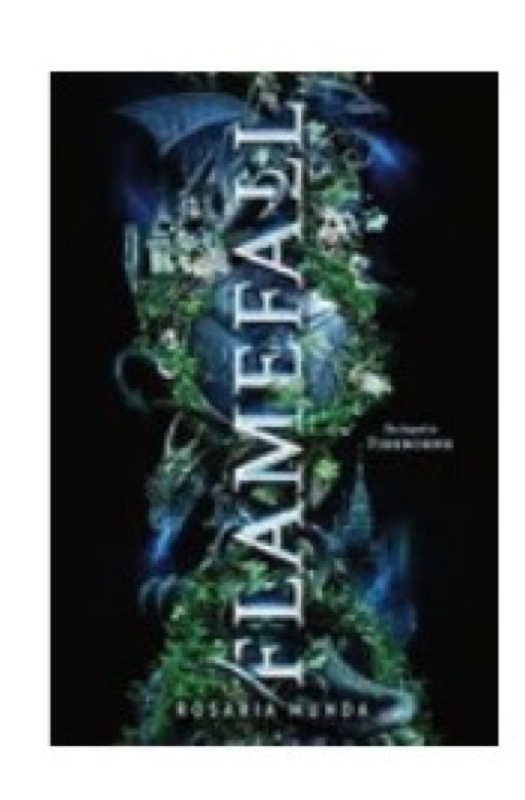
Flamefall
The sequel to Fireborne
Hook & thesis
In Flamefall, Rosaria Munda deftly intertwines elements of fantasy and romance, crafting a narrative that captures the fervent struggle for power amidst personal and political upheaval. Verdict: Munda’s intricate character interplay and the exploration of loyalty and betrayal elevate this sequel beyond mere genre conventions into a profound meditation on the costs of revolution.
The contextual pivot
Positioned within the broader landscape of fantasy romance, Flamefall navigates familiar tropes of dragons and epic battles while simultaneously subverting them through its intricate character development and nuanced political intrigue. Munda’s work resonates with fans of authors like Sabaa Tahir and Sarah J. Maas, yet it carves a distinctive niche by exploring deeper moral questions and the repercussions of choices made in the heat of rebellion. The invisible audience here is likely composed of readers who seek both adventure and an emotional tether to their characters, as Munda skillfully bridges niche fantasy elements with a broader appeal.
Deep-dive critique
Munda’s structure in Flamefall is marked by a deliberate pacing that mirrors the tumultuous emotional states of its protagonists. The dual perspectives allow readers to experience the tension and desire that underpin the relationships, particularly between the central characters, whose love is tested against a backdrop of war and political machinations. This technique serves to heighten the stakes, as the reader becomes not just an observer but an emotional participant in the unfolding drama.
The prose carries a lyrical quality that enhances the gothic undertones of the narrative. Munda’s imagery evokes visceral sensations, particularly in scenes involving the dragons, where the creatures symbolize both liberation and destruction, echoing the complex themes of freedom versus control. However, while the character development excels with rich backstories, the dialogue occasionally falters into exposition that detracts from the immediacy of the conflict. The resolution, while satisfying, raises questions about whether the characters’ arcs truly align with the thematic depth established earlier in the novel. Is the ending fully earned, or does it lean on genre expectations?
Discussion launchpad
Munda’s exploration of love and loyalty amidst chaos presents several polarizing elements ripe for discussion. The balance between romantic tension and political intrigue can provoke varied interpretations of character motivations and the ethical implications of their choices.
Questions for the room:
- How does Munda’s portrayal of dragons as agents of both destruction and freedom reflect contemporary themes in society?
- In what ways do the romantic relationships enhance or detract from the central narrative of rebellion?
- Are the characters’ actions justified given the political climate, or do they undermine their moral integrity?
- How does the dual perspective shape our understanding of loyalty and betrayal within the story?
- What gaps or biases do you perceive in the character development, particularly in relation to secondary characters?
#TheOrchidRoom #fantasyromance #romantasy #darkromance #literaryanalysis